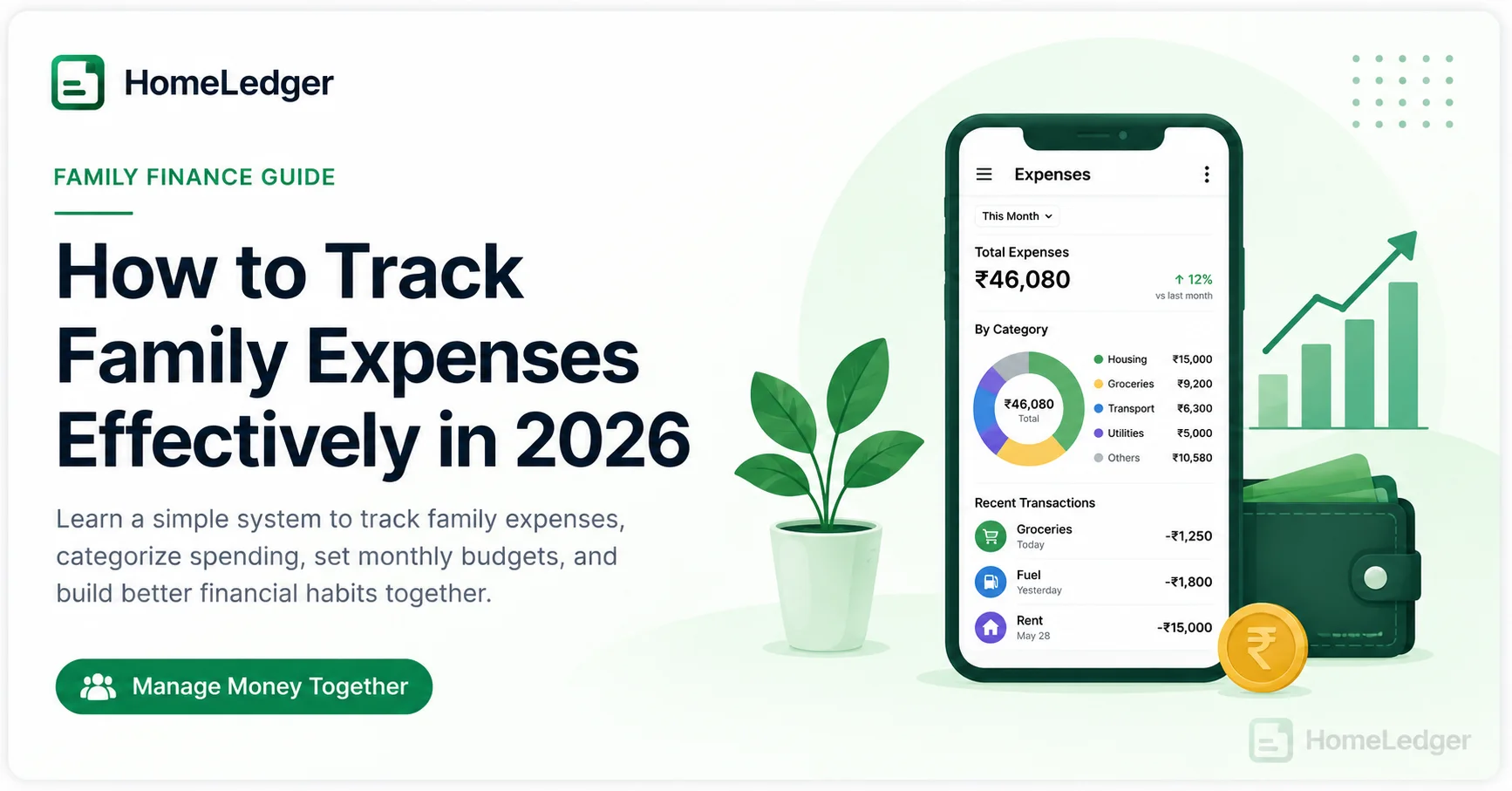
How to Track Family Expenses: A Practical Guide for Busy Families
Most families don't struggle because they don't earn enough—they struggle because it's surprisingly difficult to answer one simple question:
"Where did our money go this month?"
The monthly salary arrives, bills are paid, groceries are bought, a few online orders sneak in, someone orders food after a long workday, and suddenly the month is over. There's little left in the bank account, but no one can clearly explain why.
If that sounds familiar, you're not alone.
The good news is that tracking family expenses doesn't require complicated spreadsheets or hours of work every week. With a simple system, you can understand your spending, make better decisions, and reduce financial stress without obsessing over every rupee.
Why Most Families Lose Track of Their Spending
It's rarely because of one expensive purchase.
Instead, it's usually dozens of small decisions:
- A few grocery top-ups.
- Weekend takeout.
- Multiple streaming subscriptions.
- Children's school activities.
- Online shopping.
- Small UPI payments that are forgotten by the next day.
Individually, none of these feels significant. Together, they can quietly consume a large part of your monthly budget.
That's why tracking every expense—even the small ones—matters.
Start With One Simple Goal
Don't try to build the perfect budget on day one.
Your first goal is much simpler:
Know exactly where your money goes for the next 30 days.
That's it.
Once you understand your spending habits, budgeting becomes much easier.
Step 1: List Your Household Income
Write down every regular source of income.
For example:
| Source | Monthly Income |
|---|
| Salary (Parent 1) | ₹60,000 |
| Salary (Parent 2) | ₹35,000 |
| Freelance Work | ₹10,000 |
| Total | ₹1,05,000 |
Knowing your actual monthly income gives every spending decision context.
Step 2: Create Spending Categories That Match Your Life
Avoid creating twenty different categories you'll never use.
Start with categories that make sense for your family.
- Housing
- Groceries
- Utilities
- Transportation
- Education
- Healthcare
- Entertainment
- Shopping
- Savings
- Other
You can always make them more detailed later.
This is where most people fail.
Waiting until Sunday evening to remember what happened during the week rarely works.
Instead, record expenses as they happen.
Whether it's:
- Paying for groceries
- Ordering dinner
- Filling fuel
- Paying school fees
- Buying medicine
Capture it while it's fresh.
It takes less than a minute and saves hours later.
A Real-Life Example
Imagine a family earning ₹1,05,000 each month.
They believe groceries are their biggest expense.
After tracking spending for one month, they discover:
| Category | Amount |
|---|
| Groceries | ₹15,200 |
| Food Delivery | ₹8,900 |
| Online Shopping | ₹7,600 |
| Entertainment | ₹3,100 |
The surprise isn't the grocery bill.
It's the ₹16,500 spent on food delivery and impulse shopping—expenses they never noticed because they were spread across dozens of small transactions.
That's the real value of tracking expenses. It replaces assumptions with facts.
Review Your Spending Every Week
You don't need to monitor your budget every day.
A quick weekly review is usually enough.
Ask yourself:
- Which category is increasing faster than expected?
- Are there any unnecessary subscriptions?
- Did we stick to our grocery budget?
- Are there upcoming expenses we should prepare for?
These conversations are often more valuable than the numbers themselves.
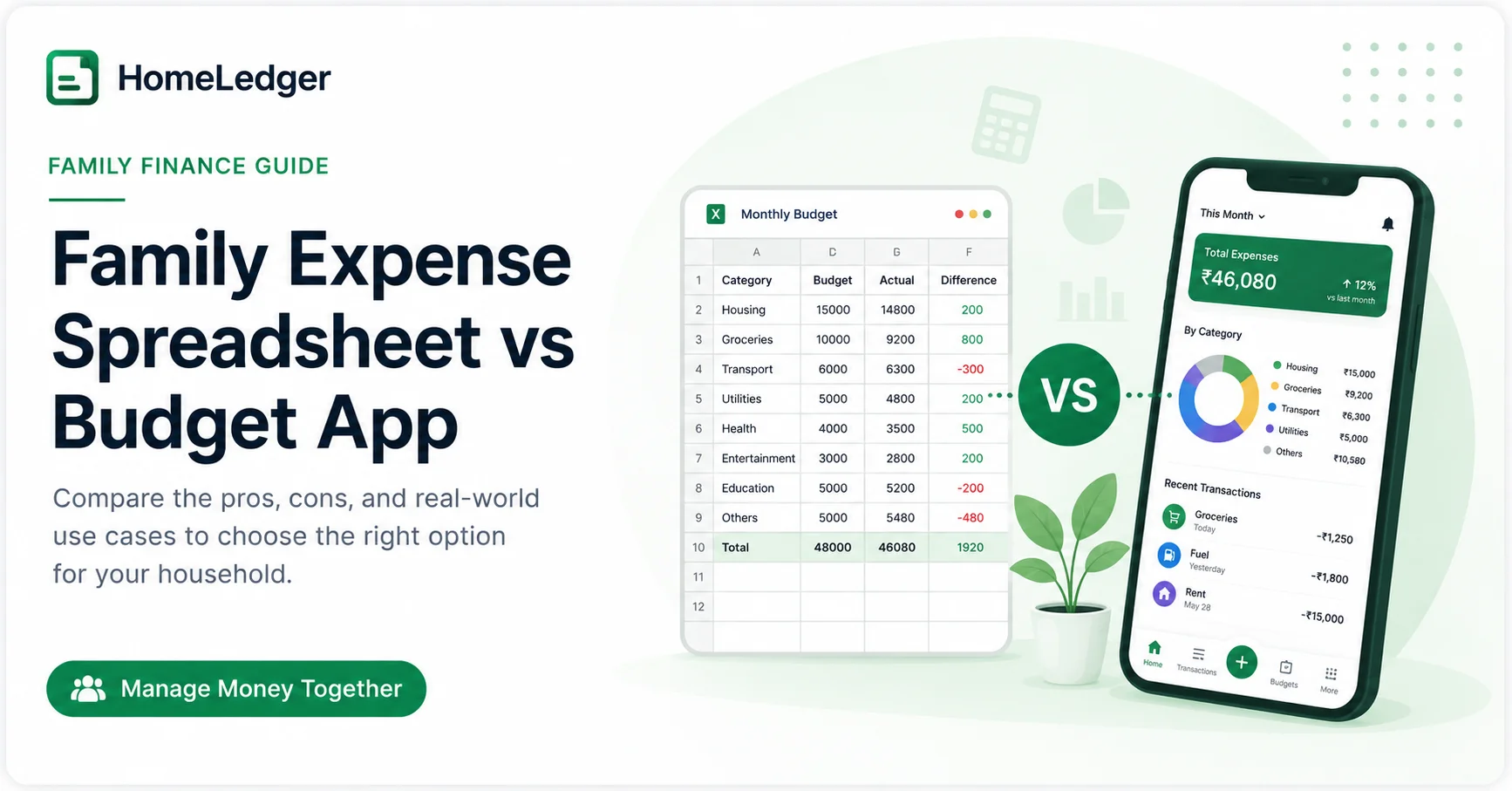
Spreadsheet or Budget App?
A spreadsheet is a good starting point.
If you're the only person managing household finances and don't mind manual updates, it can work well.
However, spreadsheets become harder to maintain when:
- Two or more people spend from the same household budget.
- Expenses need to be recorded on the go.
- You want monthly insights automatically.
- You need everyone to see the same information.
That's where a dedicated family expense tracker becomes much more convenient.
Habits That Make the Biggest Difference
Families who successfully manage their finances usually share a few habits:
- They record expenses consistently.
- They review spending once a week.
- They discuss money openly instead of avoiding it.
- They plan for irregular expenses such as insurance, festivals, or school admissions.
- They don't chase a perfect budget—they build one that works for their lifestyle.
Consistency matters far more than perfection.
Common Mistakes to Avoid
Trying to Track Everything Perfectly
Missing one expense isn't a failure.
Simply continue from the next transaction.
Ignoring Cash Payments
Small cash purchases are easy to forget but can add up quickly.
Creating Too Many Categories
Simple budgets are easier to maintain.
Treating Budgeting as One Person's Responsibility
When everyone contributes to spending, everyone should understand the household budget.
When a Family Expense Tracker Makes Sense
If you've ever found yourself asking:
- "Who paid this bill?"
- "Didn't we already buy groceries this week?"
- "Why are we overspending every month?"
then choosing the right family expense tracker can make life much easier.
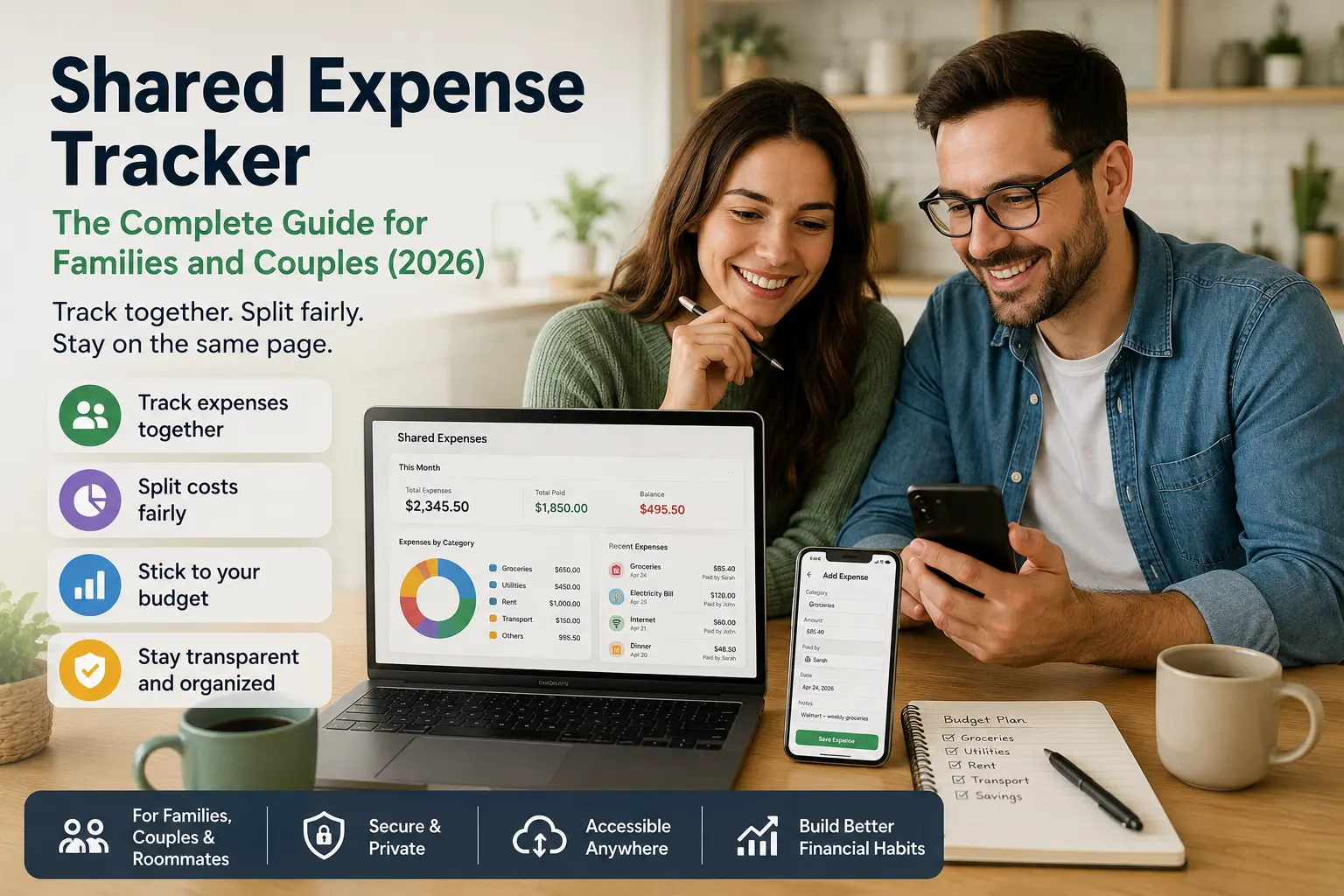
Instead of maintaining separate notes, spreadsheets, and bank statements, everyone records expenses in one place, making it easier to stay on the same page.
HomeLedger is designed with this exact use case in mind. Families can track income and expenses together, set monthly budgets, import bank statements, and understand where their money is going—all without juggling multiple apps or spreadsheets.
Frequently Asked Questions
How often should I track family expenses?
Recording expenses daily takes very little time and provides the most accurate picture of your spending.
Is a spreadsheet enough?
Yes, especially for individuals or small households. As spending becomes more collaborative, many families find an expense tracking app easier to maintain.
What's the biggest budgeting mistake families make?
Not tracking small, everyday purchases. Individually they seem insignificant, but together they often represent a meaningful part of the monthly budget.
Should children be involved in family budgeting?
Age-appropriate conversations about budgeting can help children build healthy financial habits and understand how household spending works.
Final Thoughts
Tracking family expenses isn't about restricting your lifestyle. It's about giving yourself clarity.
Once you know where your money is going, you'll find it much easier to make confident financial decisions, prepare for unexpected expenses, and save for the things that matter most.
Start simple. Stay consistent. The results usually arrive much sooner than people expect.