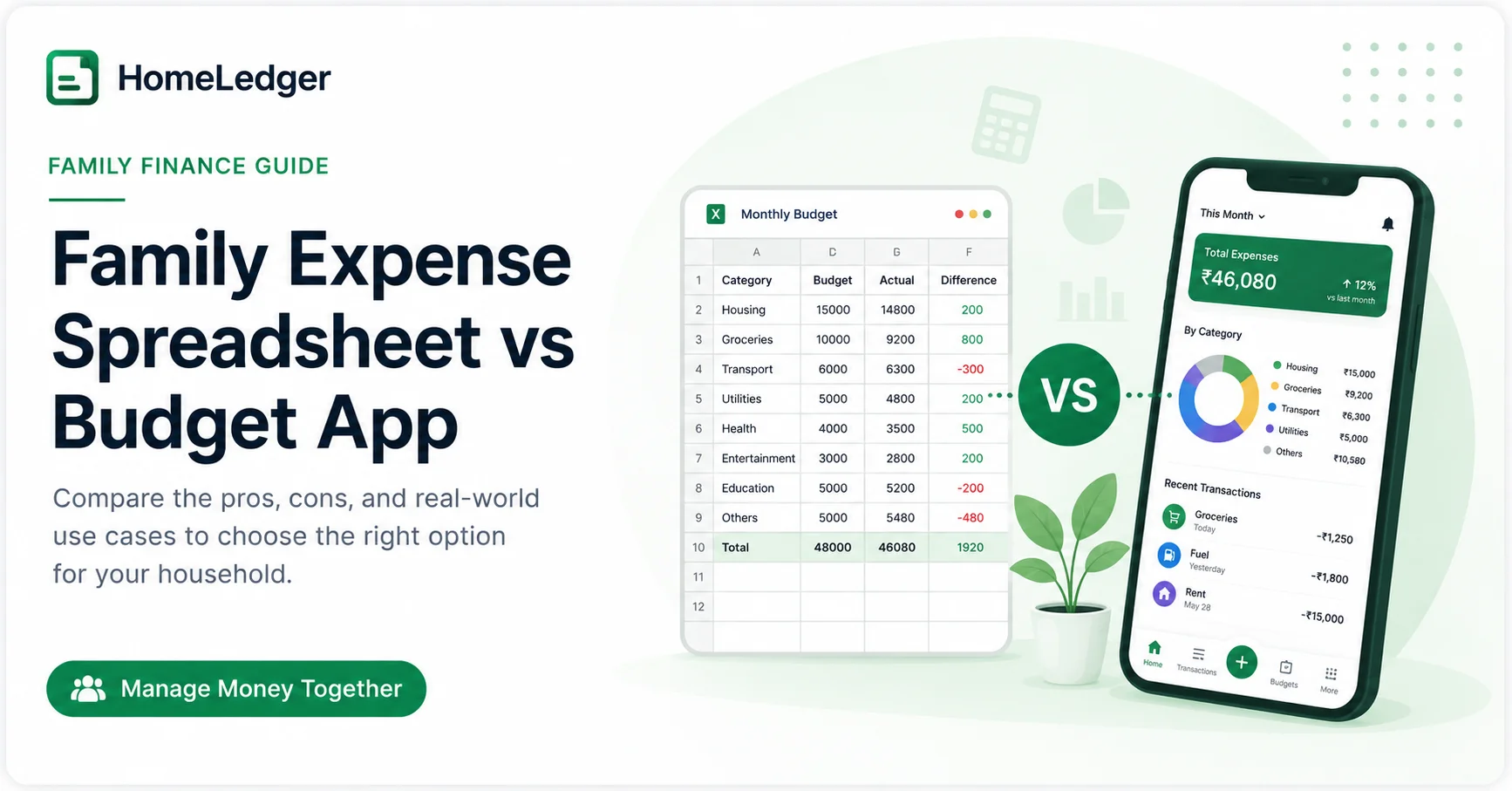
Family Expense Spreadsheet vs Budget App: Which One Is Right for You?
If you've decided to start tracking your family's expenses, you'll probably face the same question many households do:
Should we use a spreadsheet, or is it time to switch to a budgeting app?
The truth is that neither option is universally better. It depends on how your family manages money, how much time you're willing to spend maintaining records, and whether one person or multiple people are involved in household finances.
In this guide, we'll compare both approaches honestly so you can choose the one that fits your situation.
Why This Decision Matters
The tool you choose influences whether you'll actually stick with budgeting.
A system that's too complicated often gets abandoned after a few weeks. On the other hand, a system that's too simple may stop being useful as your finances become more complex.
The best budgeting system is the one your family will consistently use.
When a Spreadsheet Is the Better Choice
Spreadsheets have been used for budgeting for decades, and for good reason.
They are:
- Free to use
- Highly customizable
- Easy to back up
- Familiar to most people
- Great for detailed calculations
If you're managing your own finances and enjoy working with numbers, a spreadsheet can be an excellent starting point.
A Spreadsheet Works Well If...
- You're the only person tracking expenses.
- You don't mind entering transactions manually.
- You like creating custom formulas and reports.
- Your monthly spending is relatively straightforward.
- You already use tools like Excel or Google Sheets.
For many individuals and small households, that's more than enough.
Where Spreadsheets Start to Struggle
The challenges usually appear as life gets busier.
Imagine this situation:
One partner buys groceries.
The other pays the electricity bill.
Someone orders dinner.
A child needs school supplies.
By the weekend, those expenses are scattered across bank apps, UPI apps, receipts, and memory.
Keeping a spreadsheet accurate now depends on someone remembering to update it every day.
That's where most budgets begin to fail—not because the spreadsheet is bad, but because maintaining it becomes another chore.
What a Budget App Does Differently
A budgeting app removes much of the manual work.
Instead of waiting until the weekend, expenses can be recorded as they happen.
Everyone sees the same information, making it easier to understand where the household budget stands.
Most modern budgeting apps also provide:
<!-- TODO: Link to /blog/family-budget-categories after it is published -->
- Spending by category
- Monthly summaries
- Shared household access
- Budget tracking
- Recurring transaction management
- Faster searching and filtering
Rather than replacing good budgeting habits, they make those habits easier to maintain.
Side-by-Side Comparison
| Feature | Spreadsheet | Budget App |
|---|
| Cost | Usually free | Often free or low cost |
| Setup | Moderate | Quick |
| Manual data entry | High | Low to moderate |
| Shared access | Limited | Designed for collaboration |
| Monthly insights | Manual | Automatic |
| Mobile use | Basic | Optimized |
| Long-term maintenance | Time-consuming | Easier |
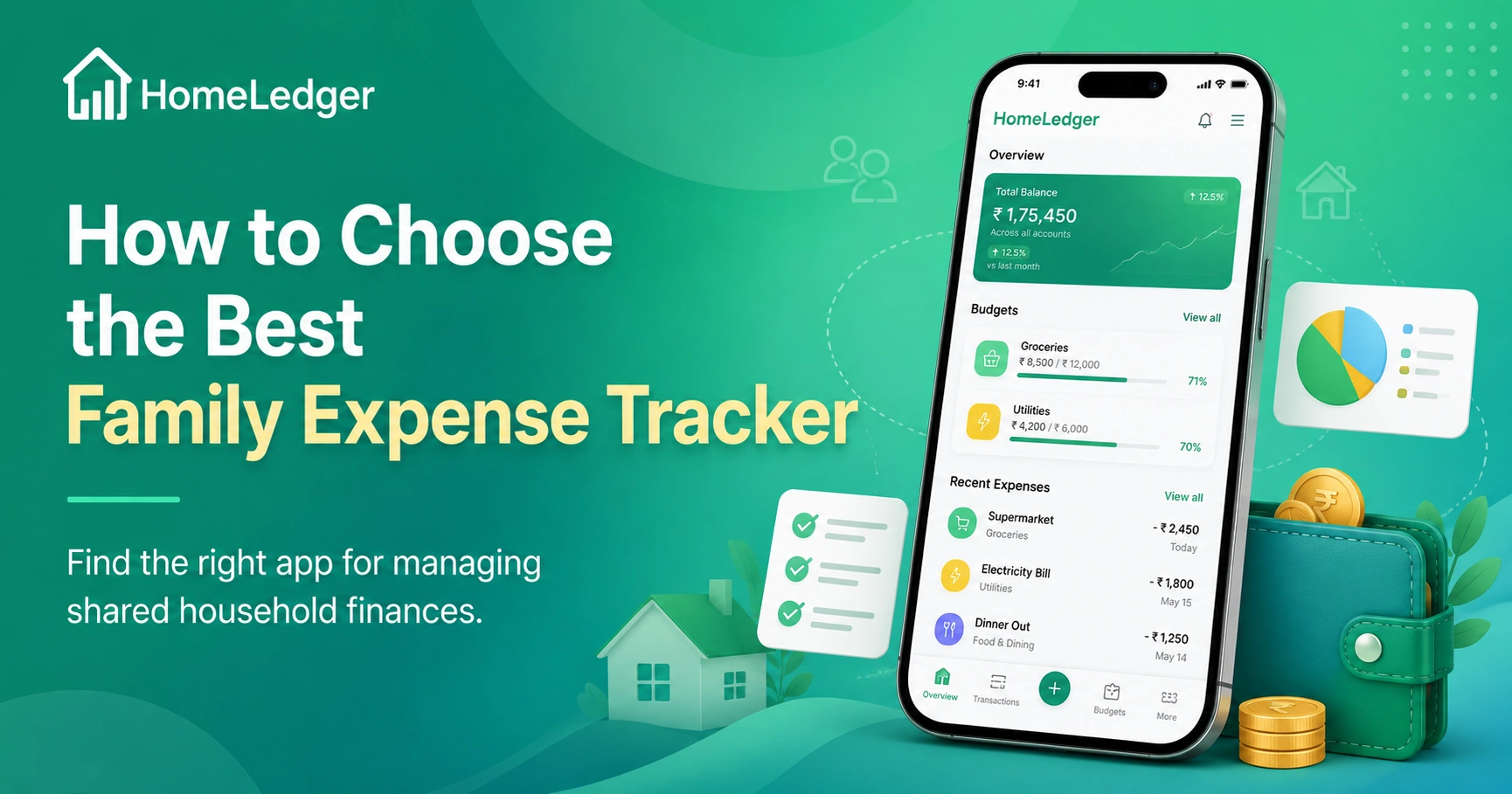
Neither option is perfect. The right choice depends on your family's needs—and if you're leaning toward an app, our guide on how to choose the best family expense tracker can help.
Which Option Fits Your Situation?
Choose a Spreadsheet If...
- You enjoy working with data.
- Only one person manages the household budget.
- You want complete control over calculations.
- Your financial situation is fairly simple.
Choose a Budget App If...
- Multiple family members spend from the same budget.
- You want to record expenses on your phone.
- You'd rather spend time reviewing your finances than maintaining spreadsheets.
- You want a clearer picture of where your money goes every month.
Can You Start With a Spreadsheet?
If you later switch to HomeLedger, review the bank statement import guide for compatible CSV files and the import workflow.
Absolutely.
Many families begin with a spreadsheet to build the habit of recording expenses.
As their needs grow, they move to a budgeting app because collaboration, reporting, and day-to-day tracking become much easier.
There's nothing wrong with starting simple.
The important part is building the habit first.
A Practical Example
Consider a family of four with two working parents.
During a typical month:
- One parent buys groceries.
- The other pays utility bills.
- Both make online purchases.
- School expenses appear throughout the month.
- Weekend outings add extra spending.
A spreadsheet can certainly record all of this.
The challenge isn't capability—it's consistency.
Every transaction has to be copied manually, and everyone needs to remember to update the same file.
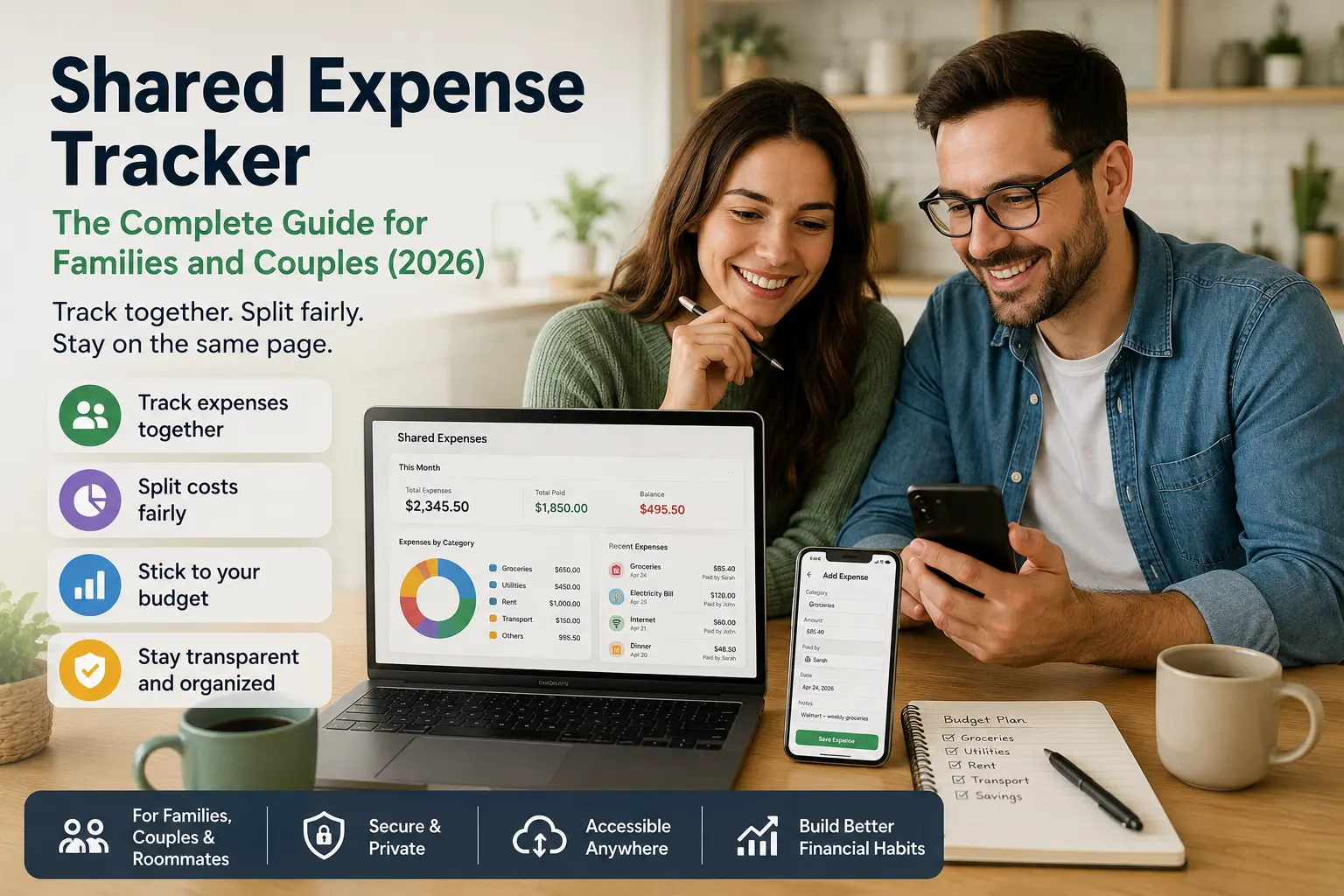
A shared budgeting app reduces that friction by keeping everything in one place.
Where HomeLedger Fits In
HomeLedger is a family expense tracker designed for families that manage money together.
Instead of maintaining multiple spreadsheets or exchanging screenshots of bank transactions, everyone contributes to the same household ledger.
You can:
- Track income and expenses together.
- Organize spending into categories.
- Create monthly budgets.
- Import supported bank statements.
- Monitor recurring expenses.
- See recent household activity in one place.
If your current spreadsheet still works for you, keep using it.
But if you're spending more time maintaining the spreadsheet than understanding your finances, it may be time to switch.
Frequently Asked Questions
Is Excel good enough for budgeting?
Yes. Excel or Google Sheets can work very well, especially for individuals or small households with simple financial needs.
Is a budgeting app more accurate than a spreadsheet?
Both can be equally accurate. The difference is that budgeting apps often make it easier to record expenses consistently, which improves the quality of your data over time.
Can multiple family members use the same spreadsheet?
They can, but keeping it updated and avoiding duplicate or missing entries can become challenging as more people contribute.
When should I move from a spreadsheet to an app?
If maintaining your spreadsheet feels like work, or if several people contribute to household expenses, a budgeting app is usually the more practical option. See how to choose the best family expense tracker for what to evaluate.
Final Thoughts
There's no perfect budgeting tool.
A spreadsheet is an excellent place to begin. It teaches you where your money goes and helps you build healthy financial habits.
But as your household grows, your finances become more collaborative, and your time becomes more valuable, a dedicated budgeting app often becomes the easier option—not because it budgets for you, but because it makes budgeting simpler to maintain.
Whatever you choose, the goal remains the same: understand your spending, make informed decisions, and build a financial system your family can stick with for years.