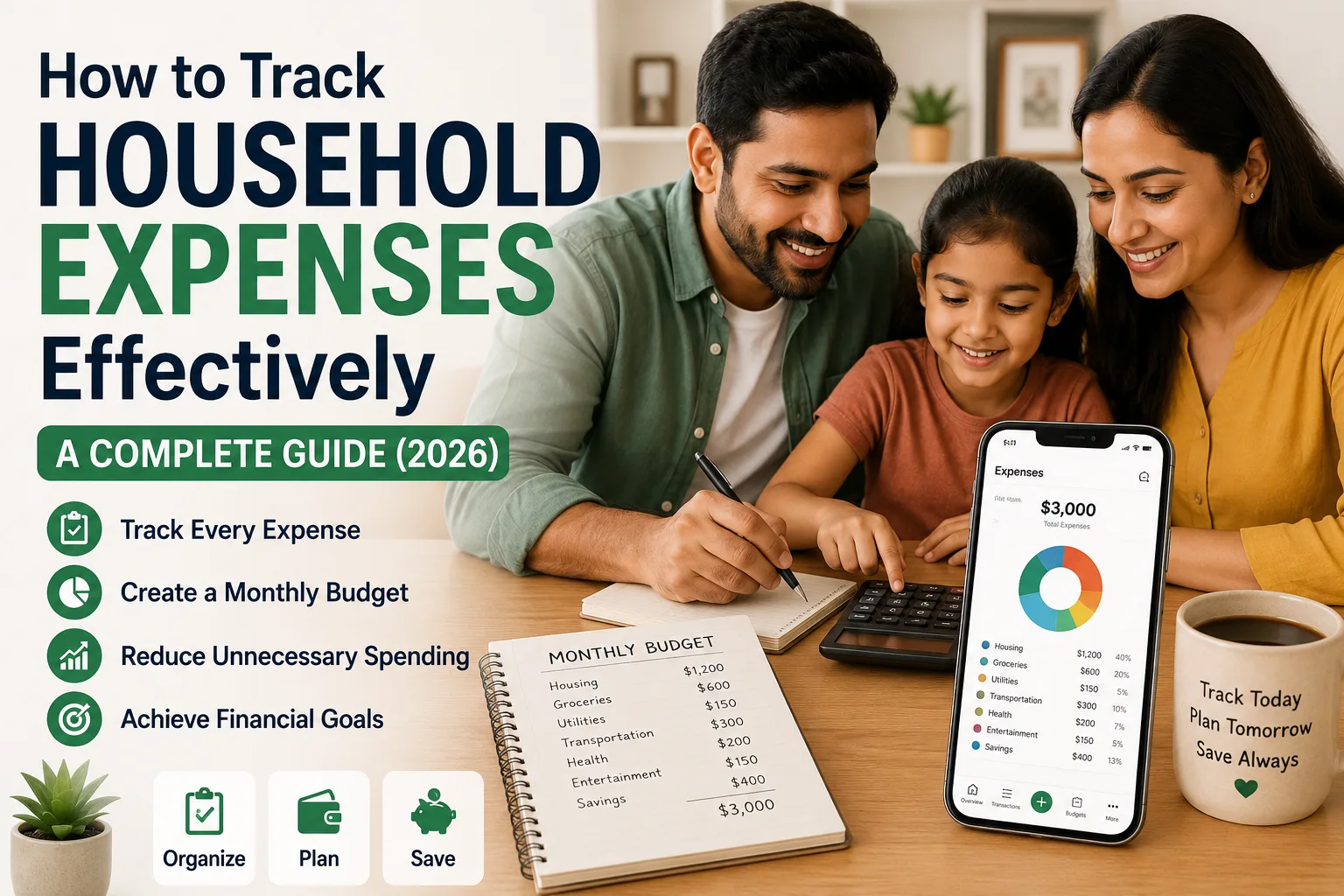
How to Track Household Expenses Effectively: A Complete Guide (2026)
Managing household expenses isn't just about saving money—it's about understanding where your income goes and making informed financial decisions. Whether you're managing finances on your own, with a partner, or for an entire family, a household expense tracker helps you stay on budget, prepare for unexpected costs, and reach long-term financial goals.
Many households struggle because small, recurring expenses go unnoticed. Over time, these costs can significantly reduce monthly savings. By tracking every expense consistently and reviewing your spending habits, you can identify unnecessary purchases and allocate your money more effectively.
In this guide, you'll learn a practical, step-by-step process to track household expenses, create a realistic monthly budget, avoid common mistakes, and choose the right tools to simplify expense management.
Why Tracking Household Expenses Matters
Tracking household expenses is the foundation of sound financial management. It gives you a clear picture of where your money goes each month, so you can make spending decisions based on facts—not guesswork.
Without a system for recording expenses, it's easy to underestimate how much you spend on groceries, dining out, subscriptions, transportation, and entertainment. Small purchases may seem insignificant on their own, but together they can take a noticeable bite out of your monthly budget.
Regular expense tracking also helps you:
- Stay within your monthly budget.
- Identify unnecessary spending habits.
- Build an emergency fund faster.
- Prepare for annual or unexpected expenses.
- Work toward long-term financial goals with confidence.
Whether you use a spreadsheet or a dedicated household expense tracker, consistency matters more than the tool you choose. Recording expenses every day—or every few days—keeps your financial records accurate and up to date.
For families managing shared finances, expense tracking creates transparency. Everyone can see where money is being spent, which reduces misunderstandings and makes it easier to plan for future expenses together.
Common Mistakes Families Make When Tracking Expenses
Many households start tracking expenses with good intentions but struggle to stick with it. Avoiding a few common mistakes can make your system more effective—and easier to sustain.
1. Not Recording Small Expenses
Small purchases—coffee, snacks, online subscriptions, convenience store runs—often go unrecorded. Each one may seem insignificant, but together they can add up to a surprising amount over a month.
2. Waiting Until the End of the Month
Trying to reconstruct a full month of spending from memory usually leads to gaps and inaccuracies. Recording transactions as they happen—or at least once a day—keeps your records reliable.
3. Using Too Many Categories
Dozens of spending categories make budgeting harder than it needs to be. Start broad: Groceries, Utilities, Transportation, Healthcare, Entertainment, Shopping, and Other. You can always add more detail later. For a fuller category list, see budget categories every family should use.
4. Ignoring Shared Expenses
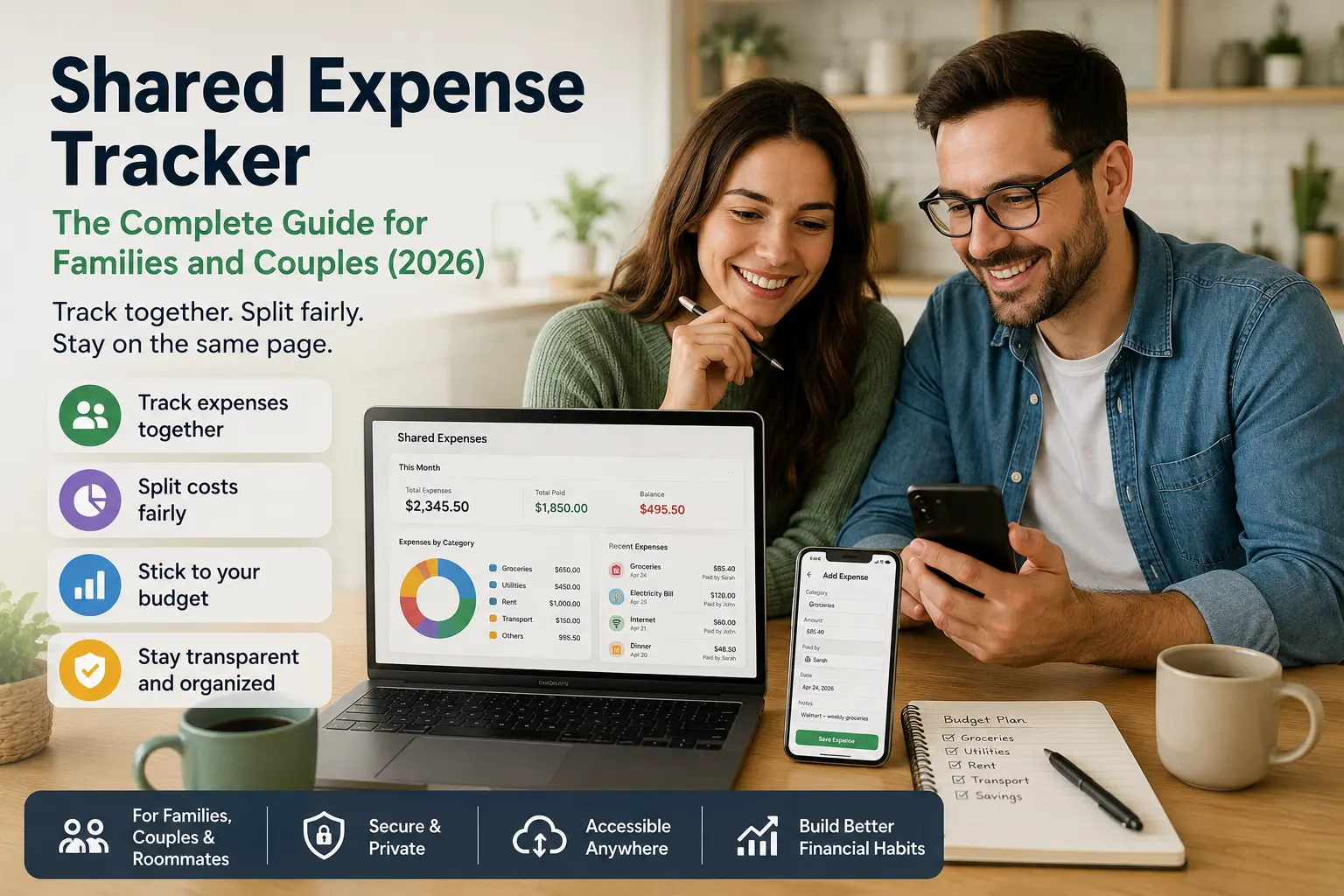
When multiple people spend from the same budget, missed entries leave you with an incomplete picture. A shared household expense tracker lets everyone log expenses in one place.
5. Never Reviewing Your Spending
Tracking only helps if you actually look at the numbers. At the end of each month, scan for patterns, spot categories where you can cut back, and adjust your budget for the month ahead.
How to Track Household Expenses in 5 Simple Steps
Tracking household expenses doesn't have to be complicated. Follow this five-step routine to stay organized and make clearer financial decisions each month.
Step 1: List Every Source of Income
List every source of household income—salaries, freelance work, rental earnings, pensions, and anything else that comes in regularly. When you know your exact monthly total, building a realistic budget gets much easier.
Step 2: Categorize Your Expenses
Group household expenses into simple categories such as:
- Groceries
- Rent or Mortgage
- Utilities
- Transportation
- Healthcare
- Education
- Entertainment
- Shopping
- Savings
- Other
Consistent categories make it easier to see where your money goes—and where you might cut back.
Step 3: Record Every Transaction
Consistency is what makes this work. Log each expense when it happens—not from memory at the end of the week. Small purchases add up faster than most people expect.
When more than one person spends from the household budget, get everyone in the habit of recording their share. Incomplete records are hard to fix later.
Step 4: Compare Spending Against Your Budget
Once a week—or at least at month-end—compare what you spent with what you planned. Flag categories where you regularly go over budget, then decide whether to trim spending or adjust the limit.
That quick check stops the same overspending patterns from repeating every month.
Step 5: Review and Improve Every Month
Recording household expenses is only half the job—you also need to learn from what the numbers show.
Set aside a few minutes each month to review trends, note where you stayed on track, and look for one or two places to save more next month. A monthly expense checklist for families provides a ready-made list of categories to review so recurring bills and savings don't get missed.
If you have historical transactions in a bank export, read our CSV statement import guide before entering them individually.
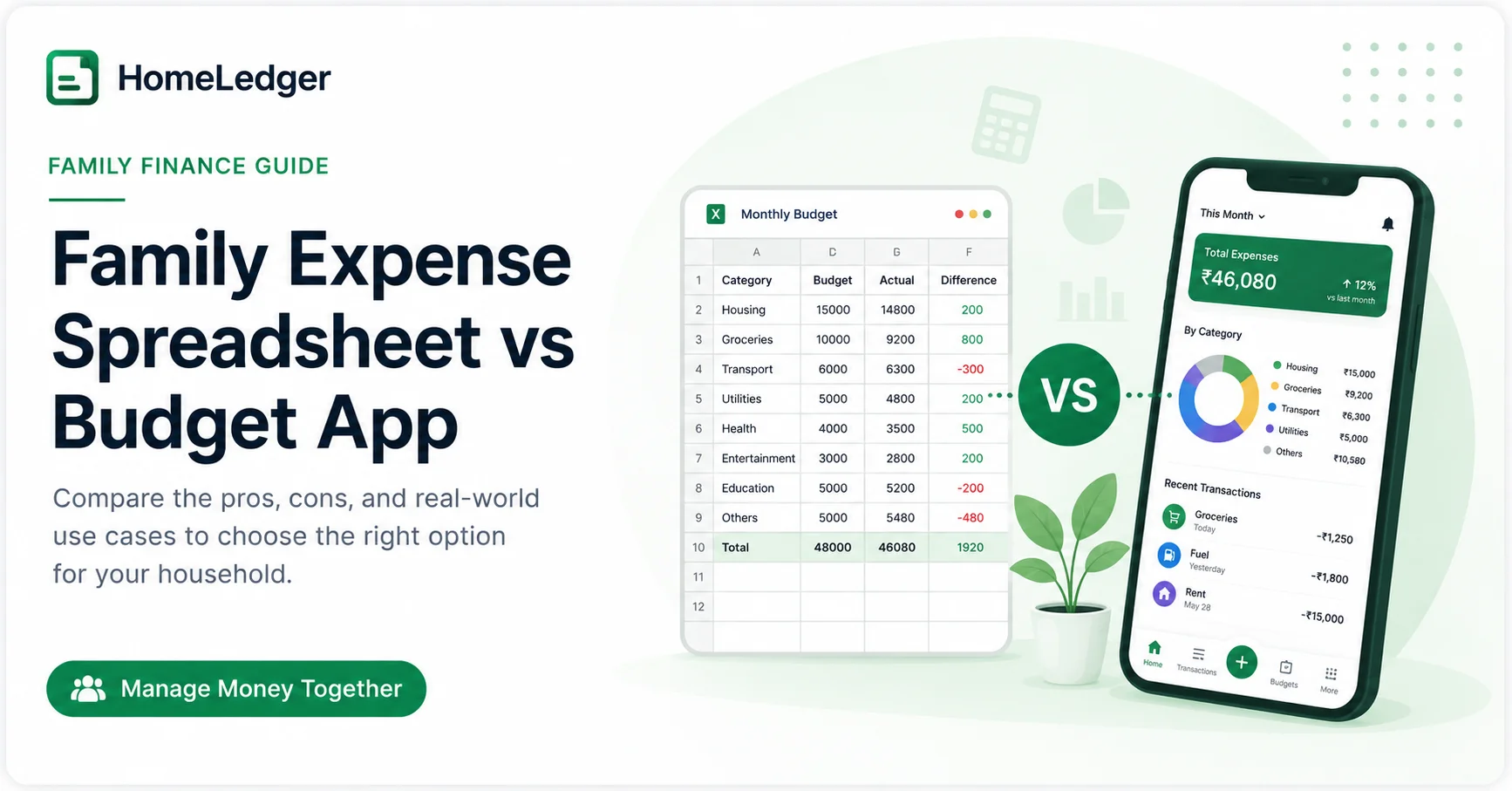
Spreadsheet vs. Household Expense Tracker App
Many households begin with a spreadsheet—and for good reason. It's familiar, flexible, and fine for basic budgeting. But as spending grows and more people contribute, spreadsheets get harder to keep accurate.
Here's a quick comparison:
| Feature | Spreadsheet | Household Expense Tracker App |
|---|
| Easy to set up | ✅ | ✅ |
| Automatic calculations | ⚠️ Manual formulas | ✅ |
| Track expenses on the go | ❌ | ✅ |
| Share with family members | Limited | ✅ |
| Monthly insights | Limited | ✅ |
| Budget tracking | Manual | ✅ |
A spreadsheet still works well if you're on your own and your finances are fairly straightforward. But if you need shared access, faster entry on the go, and clearer monthly insights, a dedicated household expense tracker is usually the better fit.
The best tool is the one you'll actually use. Pick something that makes logging expenses fast, reviewing your budget painless, and sharing updates with family effortless.
Features to Look For in a Household Expense Tracker
Not every expense tracking app is built the same way. When you're comparing options, favor tools that simplify household finances—not ones that create extra admin.
Some of the most useful features include:
- Shared household access so every family member can log their own expenses.
- Monthly budgets with clear spending limits by category.
- Expense categories that group transactions automatically.
- Recurring transactions for bills and subscriptions you pay every month.
- Bank statement import to cut down on manual entry.
- Monthly reports and insights that surface spending patterns.
- Secure cloud sync so records stay available across devices.
A good household expense tracker should save you time on record-keeping and give you clearer answers when spending decisions come up.
Why HomeLedger Makes Tracking Household Expenses Easier
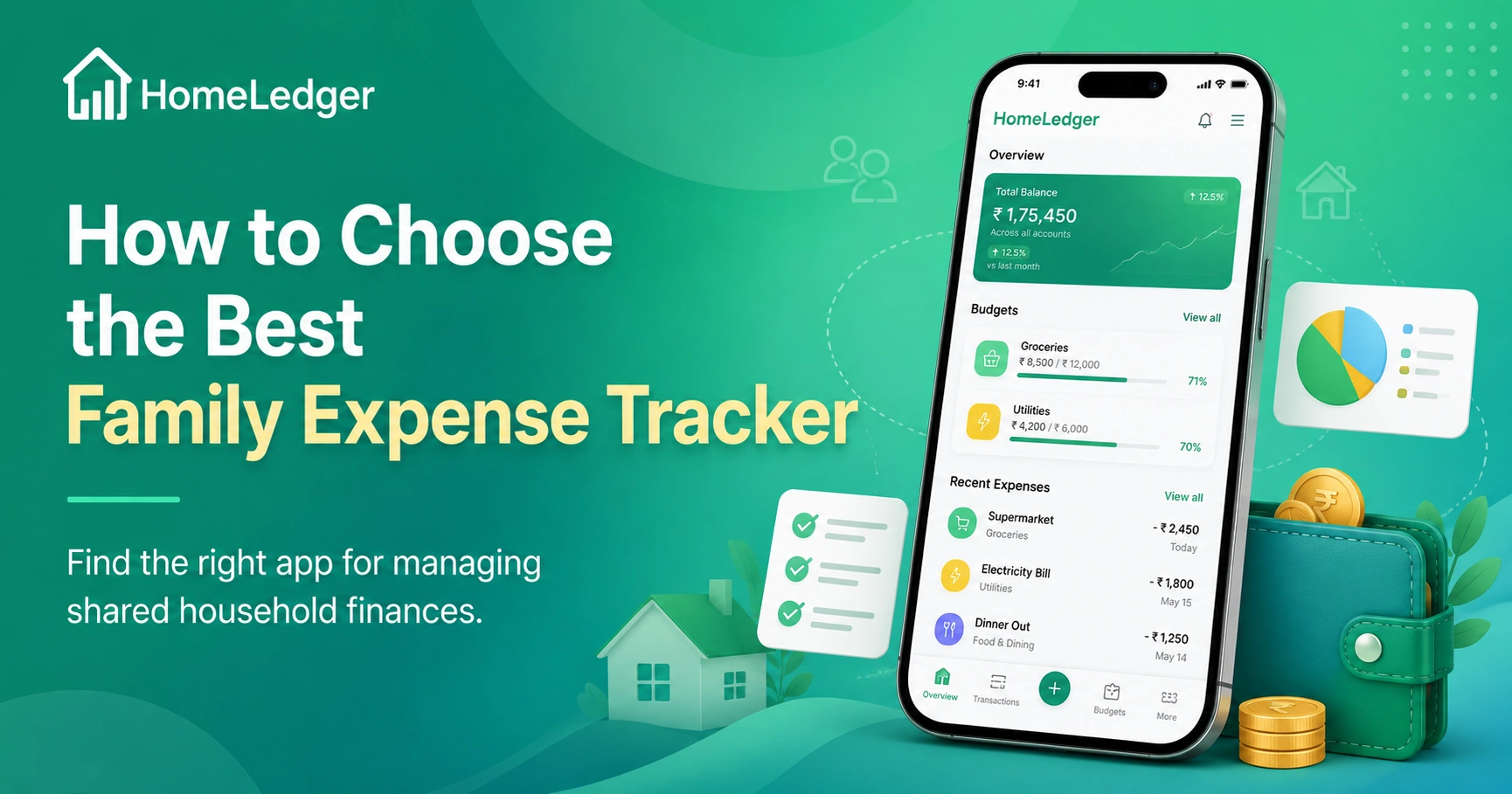
HomeLedger is built for households that want shared expense tracking without spreadsheet maintenance.
With HomeLedger, you can:
- Track income and expenses together.
- Set monthly budgets by category.
- Import bank statements when you want to catch up faster.
- Set up recurring expenses for regular bills.
- Review household spending in one place.
- Keep shared records in a secure, household-only workspace.
Whether you're budgeting solo, with a partner, or as a full household, it keeps income, expenses, and budgets in one shared view—without the upkeep spreadsheets often need.
Conclusion
Tracking household expenses doesn't require complicated spreadsheets or hours of manual work. Record income and expenses consistently, review spending regularly, and follow a realistic budget—you'll build healthier financial habits over time.
Whether you choose a spreadsheet or a dedicated household expense tracker, the most important step is to start today. Consistency is what turns expense tracking into long-term financial progress.
If you're comparing apps for shared household finances, use the feature list above as a checklist—and pick something you'll actually open every week.
Frequently Asked Questions
What is the best way to track household expenses?
Record every income and expense consistently, group transactions into categories, and review spending at least once a month. A spreadsheet works for solo budgeting; a household expense tracker helps when multiple people share costs. Either way, consistency matters more than the tool you choose.
Should I use a spreadsheet or an expense tracker app?
Spreadsheets suit simple, solo budgeting. They get harder to maintain as household expenses grow or several family members need access. A household expense tracker makes shared logging, monthly budgets, and spending reviews easier—especially on your phone.
How often should I update my household expenses?
Log household expenses when they happen—or at least once a day. Waiting until month-end leads to forgotten purchases and unreliable totals. Short, frequent updates keep your records accurate and make budgeting much easier.
What expense categories should every household have?
Start broad: Groceries, Rent or Mortgage, Utilities, Transportation, Healthcare, Education, Entertainment, Shopping, Savings, and Other. These cover most household expenses without overcomplicating your setup. Add finer categories only when one bucket hides important spending patterns.
Why is tracking household expenses important?
Tracking household expenses shows where your income actually goes—not where you assume it goes. You can spot waste early, stay within budget, prepare for surprises, and build habits that support long-term goals. Clarity is the first step toward better decisions.