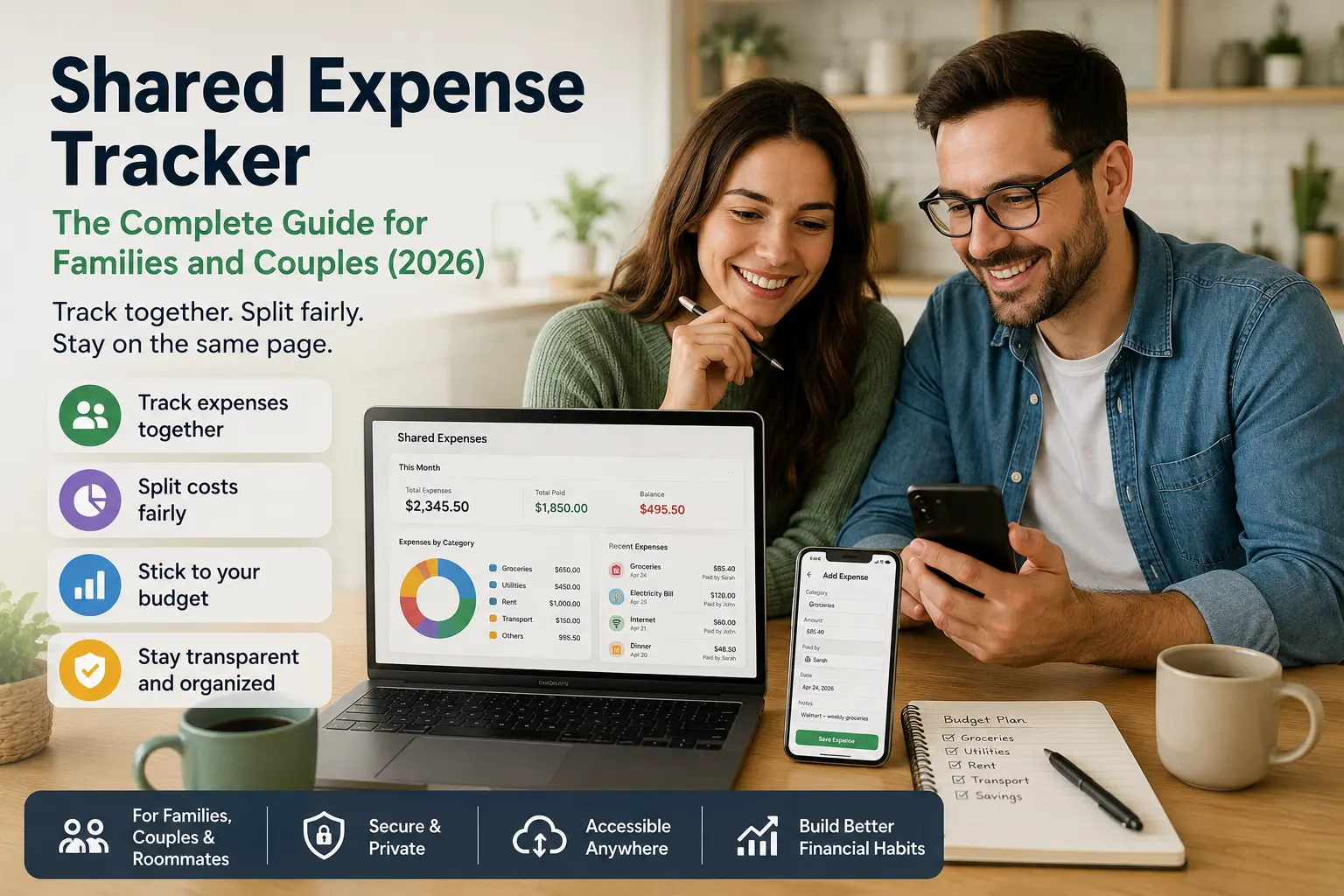
Shared Expense Tracker: The Complete Guide for Families and Couples (2026)
Managing shared finances can quickly become complicated when multiple people contribute to household expenses. Whether you're living with your partner, managing a family budget, or sharing costs with roommates (learn more about how to split expenses with roommates), keeping track of who paid for what is essential for avoiding confusion and staying financially organized.
A shared expense tracker helps everyone record expenses in one place, making it easier to split costs fairly, monitor spending, and stay within budget. Instead of relying on spreadsheets or remembering transactions from memory, every household member can contribute to a single, accurate financial record.
In this guide, you'll learn how shared expense tracking works, common mistakes to avoid, the best ways to split expenses, and the features to look for when choosing a shared expense tracker.
Why Shared Expense Tracking Matters
Tracking shared expenses is the foundation of managing money together. When partners, family members, or roommates all pay from the same budget, everyone needs a clear view of what's been spent—and who covered each bill.
Without a central record, costs scatter across accounts, payment apps, and memory. Small purchases get forgotten, balances can feel unfair, and it's harder to split expenses or stay on track as a household.
Shared expense tracking helps you:
- Split rent, groceries, and bills fairly.
- See who paid for what without digging through messages.
- Stay within your shared monthly budget.
- Reduce money-related misunderstandings.
- Plan upcoming shared costs with confidence.
Whether you use a spreadsheet or a shared expense tracker, one shared record beats separate notes. When everyone logs expenses in the same place, your household stays aligned without constant reconciliations.
Common Challenges with Shared Expenses
Sharing expenses sounds simple until everyday spending starts adding up. Groceries, utility bills, dining out, online subscriptions, school fees, and unexpected purchases can quickly make it difficult to remember who paid for what. Without a clear system, even small expenses can lead to confusion and unnecessary conversations.
Here are some of the most common challenges that families, couples, and roommates face when managing shared expenses.
Forgetting to Record Expenses
One of the biggest mistakes is relying on memory. A coffee on the way to work, an online purchase, or a grocery trip can all easily be forgotten by the end of the week. Missing even a few transactions makes it difficult to understand where your money is going.
Using Different Tracking Methods
It's common for one person to use a spreadsheet, another to keep notes on their phone, and someone else to rely on their banking app. When financial records are scattered across multiple places, no one has a complete picture of the household's spending.
Uneven Contributions
Not every household shares expenses equally. One partner might pay the rent while another covers groceries and utilities. Without proper tracking, it's difficult to know whether everyone is contributing fairly over time.
Missing Recurring Expenses
Monthly subscriptions, insurance premiums, internet bills, and streaming services are easy to overlook because they happen automatically. If these recurring expenses aren't tracked, your monthly budget can quickly become inaccurate.
No Regular Budget Reviews
Recording expenses is only half of the process. Without reviewing your spending at the end of each month, it's hard to identify unnecessary expenses or adjust your budget based on changing financial priorities.
The good news is that all of these challenges can be solved with a simple, consistent process that everyone in the household follows.
How to Track Shared Expenses in 5 Simple Steps
A successful shared expense system doesn't require complicated spreadsheets or accounting knowledge. The key is creating a simple process that everyone in the household follows consistently.
Step 1: Decide Which Expenses Are Shared
Start by agreeing on which expenses should be tracked together. Every household is different, but common shared expenses include:
- Rent or mortgage
- Groceries
- Utilities
- Internet and mobile bills
- Streaming subscriptions
- Transportation
- Children's education
- Household supplies
- Dining out together
Keeping personal and shared expenses separate makes budgeting much easier and avoids unnecessary confusion.
Step 2: Choose One Place to Track Everything
One of the biggest reasons expense tracking fails is that everyone records transactions in different places. Instead of using multiple spreadsheets, notes, or messaging apps, choose a single shared expense tracker where everyone records their spending.
Having one source of truth makes it easy to review expenses, understand spending patterns, and avoid duplicate or missing entries.
Step 3: Record Expenses as Soon as They Happen
The longer you wait, the easier it becomes to forget purchases. Encourage every household member to record expenses immediately after making them or at the end of each day.
Small transactions may seem unimportant, but together they often represent a significant portion of your monthly spending.
Step 4: Create a Monthly Budget
Tracking expenses tells you where your money goes, while budgeting helps you decide where it should go.
Set monthly spending limits for categories such as groceries, transportation, utilities, entertainment, and healthcare. Reviewing your actual spending against your budget helps you identify categories where adjustments are needed.
A shared budget also ensures everyone understands the household's financial priorities.
Step 5: Review Spending Together Every Month
Schedule a monthly review to discuss spending with everyone involved. Look for categories where expenses were higher than expected, celebrate areas where you stayed within budget, and identify opportunities to save during the following month.
Regular reviews build better financial habits and keep everyone accountable without creating unnecessary disagreements.
Best Ways to Split Household Expenses
Every household has a different approach to managing money. The best method depends on your income, financial goals, and personal preferences. The important thing is choosing a system that everyone understands and follows consistently. For a deeper comparison of equal, income-based, and hybrid approaches, see how to split household expenses fairly.
Split Everything Equally
Many couples and roommates prefer to split all shared expenses equally. Every bill is divided into equal portions, making the process simple and transparent.
This approach works well when everyone has a similar income and contributes equally to household finances.
Split Expenses Based on Income
If household members have significantly different incomes, splitting expenses according to income can feel more balanced. For example, someone earning 70% of the household income may contribute 70% of the shared expenses, while the other contributes 30%.
This method ensures that financial responsibilities remain fair without placing unnecessary pressure on one person.
Assign Responsibility for Different Bills
Some households prefer assigning specific expenses to different people. One person might pay the rent, another covers groceries, and someone else manages utility bills.
This approach is easy to manage, but it works best when every payment is still recorded in the same shared expense tracker. Otherwise, it becomes difficult to understand the household's total spending.
Use a Shared Household Budget
Instead of deciding who pays each bill individually, many families create a shared monthly budget. Everyone contributes to a common household fund, and all shared expenses are paid from that budget.
This approach provides better visibility into overall spending and simplifies financial planning.
Review Contributions Regularly
Household finances change over time. Salary increases, new expenses, or changes in family circumstances may require you to adjust how shared expenses are divided.
Review your contribution method every few months to ensure it still feels fair for everyone involved.
Spreadsheet vs Shared Expense Tracker App
Many households begin by tracking shared expenses in a spreadsheet. It's free, familiar, and flexible enough for basic budgeting. However, as more people become involved and the number of transactions grows, spreadsheets often become difficult to maintain.
Here's a comparison of the two approaches:
| Feature | Spreadsheet | Shared Expense Tracker App |
|---|
| Easy to get started | ✅ | ✅ |
| Record expenses from multiple devices | ❌ | ✅ |
| Real-time updates | ❌ | ✅ |
| Share with family or partner | Limited | ✅ |
| Budget tracking | Manual | ✅ |
| Spending insights | Limited | ✅ |
| Recurring expense management | Manual | ✅ |
A spreadsheet can work well for individuals or households with very simple finances. However, if multiple people need to record expenses, review budgets together, or understand spending in real time, a shared expense tracker provides a much smoother experience.
The best tool is the one that everyone will actually use. Choose a solution that makes recording expenses quick, reviewing budgets simple, and collaborating effortless.
For an overview of available tools, compare shared expense tracker apps. To divide a particular expense, use the shared expense split calculator.
Features to Look For in a Shared Expense Tracker
Not every shared expense tracker offers the same experience. The right app should make managing household finances simpler, not add more work.
Here are some features worth looking for:
- Shared access so every household member can record expenses.
- Monthly budgets to help control spending.
- Expense categories for better organization.
- Recurring transactions for subscriptions and regular bills.
- Bank statement import to reduce manual data entry.
- Spending insights that highlight where your money goes.
- Secure cloud sync so everyone sees the latest information.
- Fast search and filters to quickly find past transactions.
A good shared expense tracker should save time, improve transparency, and help everyone stay accountable for household spending.
Why HomeLedger Works Well for Shared Finances
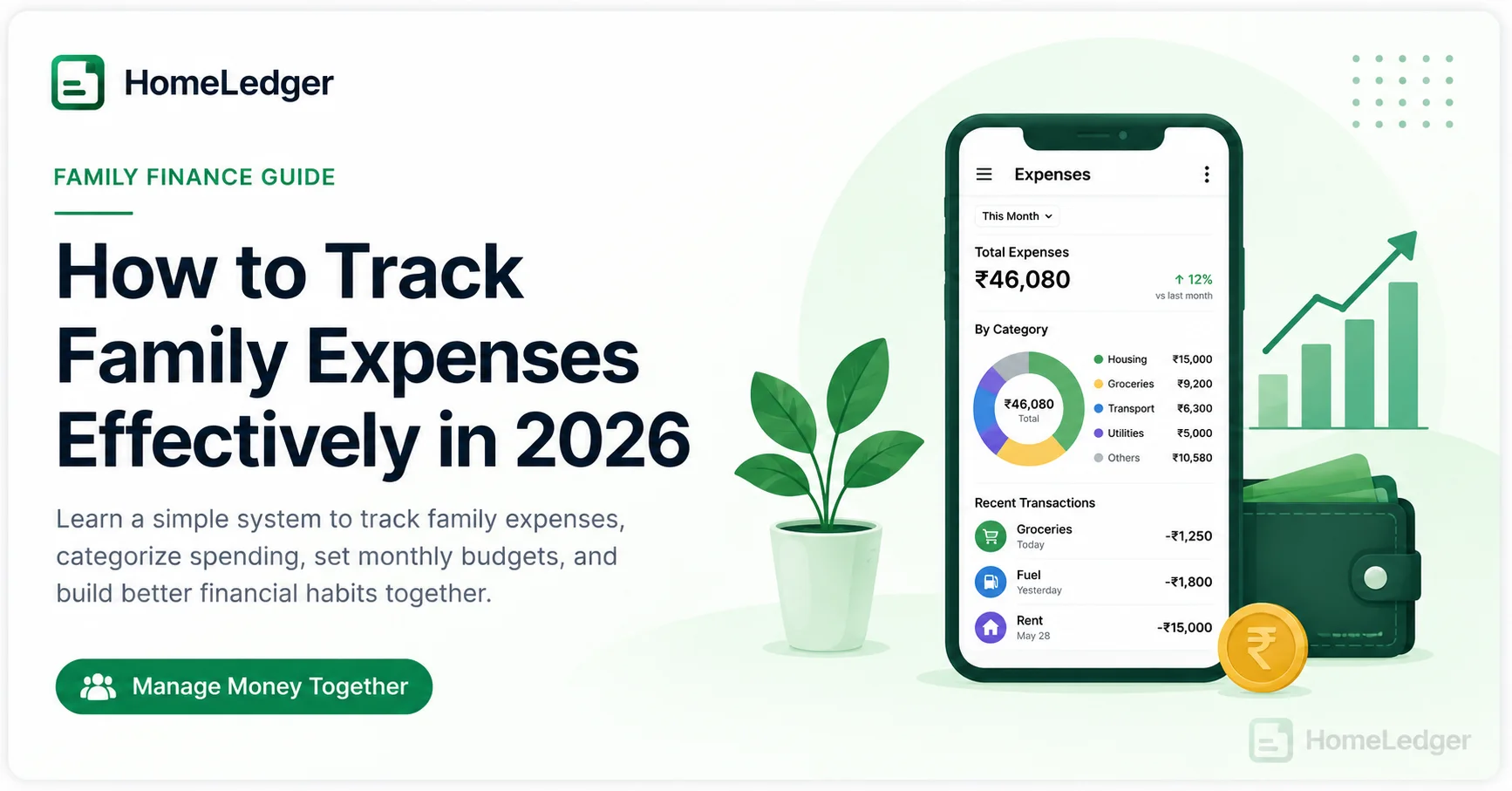
HomeLedger is built specifically for families and households that want to manage shared finances together.
Instead of maintaining separate spreadsheets or exchanging payment screenshots, everyone contributes to a single household ledger that stays up to date.
With HomeLedger, you can:
- Track income and expenses together.
- Create monthly budgets for different spending categories.
- Import bank statements to save time.
- Record recurring expenses automatically.
- Search past transactions instantly.
- View spending insights for the entire household.
- Keep everyone's financial records organized in one place.
Whether you're managing finances with your partner, your family, or even roommates, HomeLedger makes shared expense tracking simple without adding unnecessary complexity.
Frequently Asked Questions
What is a shared expense tracker?
A shared expense tracker is a tool that allows multiple people to record and monitor household expenses together. Instead of maintaining separate records, everyone contributes to a single shared view of income, expenses, budgets, and spending history.
What is the best way to split household expenses?
There isn't a single approach that works for every household. Some families split expenses equally, while others contribute based on income or divide responsibility for different bills. The best system is one that everyone agrees on and reviews regularly.
Can couples use a shared expense tracker?
Yes. Many couples use a shared expense tracker to manage groceries, rent, utilities, subscriptions, travel, and other day-to-day expenses. It provides transparency and makes budgeting together much easier.
Are spreadsheets good enough for tracking shared expenses?
Spreadsheets are useful for simple budgeting, but they become harder to maintain as more people contribute expenses. A dedicated shared expense tracker provides better collaboration, easier budgeting, and real-time updates.
How often should shared expenses be reviewed?
Reviewing shared expenses at least once a month helps everyone stay aligned with the household budget. Weekly check-ins can also be useful for families with frequent shared spending.
Conclusion
Managing shared expenses doesn't have to be stressful. By deciding which expenses are shared, recording every transaction, creating a realistic budget, and reviewing spending regularly, families and couples can stay organized and avoid unnecessary financial disagreements.
Whether you use a spreadsheet or a dedicated shared expense tracker, consistency is the key to success. The easier it is for everyone to contribute, the more accurate your financial records will be.
If you're looking for a simple way to manage shared household finances, choose a solution that makes budgeting, expense tracking, and collaboration easy for everyone involved.