No email address or registration is required. The workbook includes a monthly budget with 11 expense categories, planned versus actual spending, automatic totals and a dashboard with a comparison chart. It also includes instructions and hypothetical sample figures; replace the blue input cells with your own amounts, and keep the calculated green cells unchanged. Use one currency consistently and make a new copy for each month.
Managing a household budget shouldn't feel overwhelming, yet many families struggle to answer simple questions like: Where did our money go this month? or Why are we spending more than we planned? Without a clear system, it's easy for groceries, utility bills, subscriptions, and unexpected expenses to slowly eat away at your monthly income.
That's where a household budget template can make a real difference. Instead of guessing where your money is going, a well-designed template helps you organize your income, categorize expenses, and monitor your spending throughout the month. Whether you're budgeting for the first time or looking to improve your family's financial habits, having everything in one place makes it much easier to stay on track.
Many people start with a simple spreadsheet or printable worksheet, while others eventually switch to digital budgeting tools as their needs grow. Regardless of the method you choose, the most important step is building the habit of planning your finances before the month begins rather than reacting after the money has already been spent.
In this guide, you'll learn what a household budget template is, what it should include, and how to use one effectively. We'll also share a practical example, highlight common budgeting mistakes to avoid, and compare traditional spreadsheets with modern budgeting apps so you can choose the approach that works best for your family. By the end, you'll have everything you need to confidently manage your monthly household finances.
Quick Summary
A household budget template helps you plan your monthly income, expenses, and savings.
Every budget should include categories like housing, groceries, utilities, transportation, healthcare, and savings.
Review your budget every month and compare planned vs. actual spending.
The best budget is one you can maintain consistently—not the most detailed one.
What Is a Household Budget Template?
A household budget template is a structured document that helps you plan, organize, and track your family's income and expenses over a specific period, usually one month. Think of it as a financial roadmap that shows where your money comes from, where it's being spent, and how much you can save after covering essential expenses.
Unlike simply checking your bank balance, a budget template encourages proactive planning. Instead of asking, "How much did we spend?" at the end of the month, you're deciding in advance how much you want to spend on groceries, rent, transportation, entertainment, and savings. This small shift in mindset can make a significant difference in achieving long-term financial stability.
Most monthly household budget templates are divided into three main sections:
Section
Purpose
Income
Records all sources of money coming into the household, such as salaries, freelance income, business earnings, rental income, or government benefits.
Expenses
Lists planned and actual spending across categories like housing, groceries, utilities, transportation, healthcare, insurance, education, and entertainment.
Savings & Goals
Tracks money allocated toward emergency funds, investments, debt repayment, vacations, or other financial goals.
Together, these sections provide a complete picture of your household finances, making it easier to understand your cash flow and make informed financial decisions.
Who Should Use a Household Budget Template?
A household budget template isn't just for people struggling with money. In fact, it's useful for almost anyone who wants greater control over their finances.
It works especially well for:
Families managing multiple sources of income.
Couples combining finances after marriage.
Parents planning monthly expenses for children.
Roommates sharing rent and utility bills.
Individuals trying to build better budgeting habits.
Whether your monthly income is ₹40,000 or ₹4,00,000, having a structured budget helps ensure your money is working toward your priorities instead of disappearing on unplanned spending.
Household Budgeting vs. Expense Tracking
These two terms are often used interchangeably, but they serve different purposes.
Household Budgeting
Expense Tracking
Plans your spending before the month begins.
Records what you've already spent.
Helps set spending limits.
Helps understand spending habits.
Focuses on future financial goals.
Focuses on historical transactions.
Encourages proactive financial decisions.
Encourages awareness and accountability.
The most effective financial systems combine both approaches. A budget tells you what you intend to spend, while expense tracking helps you measure whether you're staying within those limits.
A Simple Example
Imagine a family that earns ₹1,20,000 each month.
Before the month starts, they decide to allocate:
₹35,000 for housing
₹15,000 for groceries
₹8,000 for transportation
₹10,000 for utilities
₹12,000 toward savings
The remaining amount across education, healthcare, entertainment, insurance, and other expenses.
As the month progresses, they record their actual spending and compare it with the planned budget. If grocery expenses rise to ₹18,000 instead of ₹15,000, they can immediately identify the overspending and adjust other categories before the month ends.
Without a household expense template, these spending patterns often go unnoticed until the bank account balance starts running low.
Common Misconceptions About Budget Templates
Many people avoid budgeting because they believe it's complicated or restrictive. In reality, a budget template is simply a planning tool that gives you greater visibility into your finances.
Some common myths include:
"Budgeting means I can't enjoy my money."
A good budget includes spending for entertainment, hobbies, and personal goals.
"I earn enough, so I don't need a budget."
Higher income often comes with higher expenses. Budgeting helps prevent lifestyle inflation.
"Budget templates are only for spreadsheets."
While spreadsheets remain popular, many families now use budgeting apps that automate calculations, sync expenses across devices, and make collaboration much easier.
The goal isn't to eliminate spending—it's to spend intentionally. A well-designed household budget template helps you understand where your money goes so you can make better financial decisions month after month.
Why Every Family Needs a Budget Template
Managing a household involves more than paying bills on time. From groceries and school fees to rent, insurance, and unexpected medical expenses, money flows in many directions every month. Without a clear plan, it's easy to lose track of spending and wonder why there's so little left at the end of the month.
A household budget template provides structure. Instead of reacting to financial surprises, you can anticipate expenses, make informed decisions, and work toward long-term financial goals. Whether you're budgeting as a couple, a family, or even sharing expenses with roommates, a budget template gives everyone a clear picture of where the money is going.
Gain Complete Visibility Into Your Finances
One of the biggest benefits of using a budget template is visibility. Many households know roughly how much they earn each month but have only a vague idea of where that income is spent.
By listing every source of income alongside planned and actual expenses, you can quickly identify:
Which categories consume the largest share of your budget.
Areas where you're consistently overspending.
Fixed expenses versus discretionary spending.
Opportunities to save more each month.
This level of transparency makes financial decisions less stressful because you're working with facts rather than assumptions.
Take Control of Your Spending
Small expenses often have the biggest impact on a monthly budget. Daily coffee, food delivery, online subscriptions, and impulse purchases may seem insignificant on their own, but together they can add up to thousands each month.
A monthly household budget template encourages intentional spending by assigning every rupee a purpose before the month begins.
For example, if you've allocated ₹12,000 for dining out and you've already spent ₹10,500 halfway through the month, you'll know it's time to slow down before exceeding your budget.
This proactive approach is far more effective than reviewing bank statements after the money has already been spent.
Build Savings Consistently
Many people treat savings as whatever is left over at the end of the month. Unfortunately, there's often very little left.
A better approach is to include savings as a planned expense within your budget. By setting aside money for an emergency fund, investments, debt repayment, or future goals before spending elsewhere, you're more likely to build wealth consistently.
Even saving a small amount every month can make a significant difference over time.
Reduce Financial Stress
Money is one of the most common sources of stress within households. Uncertainty about bills, unexpected expenses, or whether you'll have enough money to cover upcoming costs can create unnecessary anxiety.
A budget template doesn't eliminate every financial challenge, but it provides clarity. Knowing exactly how much you've planned to spend—and how much remains—helps you make decisions with confidence instead of guesswork.
Many families find that simply having a clear monthly plan reduces financial stress and improves communication around money.
Work Toward Shared Financial Goals
A budget isn't just about limiting spending—it's about aligning your money with what's most important to your household.
Whether your goal is:
Building a six-month emergency fund,
Saving for a family vacation,
Buying a home,
Paying off debt,
Funding your children's education,
a household budget template helps you allocate money toward those goals every month instead of hoping there's enough left over.
When everyone understands the family's financial priorities, it becomes easier to make spending decisions that support those long-term objectives.
Budgeting Becomes Easier When It's a Shared Habit
Budgeting shouldn't be the responsibility of just one person. In many households, one partner manages the finances while everyone else simply spends. This often leads to misunderstandings and makes it difficult to stay on the same page.
A shared budgeting routine—where everyone understands the household's income, planned expenses, and financial goals—creates greater accountability and transparency. Whether you review your budget together once a week or once a month, a monthly expense checklist helps ensure recurring bills and savings goals are reviewed consistently.
Ultimately, a household budget template is more than a spreadsheet or worksheet. It's a practical tool that helps families spend intentionally, save consistently, and make confident financial decisions month after month.
What Should a Household Budget Template Include?
A good household budget template should give you a complete picture of your monthly finances—not just how much money you earn, but exactly where it goes. While every family's financial situation is different, most budgets follow the same core structure: income, essential expenses, discretionary spending, savings, and financial goals.
Including the right categories from the beginning makes your budget easier to maintain and helps ensure that no important expenses are overlooked.
Essential Budget Categories
Category
What to Include
Budgeting Tip
Income
Salary, freelance income, business income, rental income, bonuses, government benefits
Budget using your average monthly income instead of irregular windfalls.
Housing
Rent or mortgage, maintenance charges, property tax
Housing is usually your largest expense. Aim to keep it within 25–35% of your monthly income whenever possible.
Groceries
Food, household essentials, cleaning supplies
Track grocery bills weekly instead of waiting until month-end to avoid overspending. A dedicated grocery budget planner can help you set realistic limits and review spending each month.
Utilities
Electricity, water, gas, internet, mobile bills
Use previous bills to estimate monthly costs and account for seasonal fluctuations.
Transportation
Fuel, public transport, parking, vehicle maintenance
Include annual servicing costs by dividing them into a monthly amount.
Healthcare
Medicines, doctor visits, health insurance premiums
Even if you rarely visit a doctor, set aside a small monthly healthcare budget.
Education
School fees, tuition, books, online courses
Include recurring education expenses rather than treating them as one-time costs.
Insurance
Life, health, vehicle, home insurance
Spread annual premiums across twelve months to avoid unexpected financial pressure.
Allocate a fixed amount so you can enjoy life without feeling guilty about spending.
Savings & Investments
Emergency fund, SIPs, retirement, investments
Treat savings as a fixed monthly expense rather than saving whatever remains.
Miscellaneous
Gifts, repairs, festivals, unexpected purchases
Every budget needs flexibility. A miscellaneous category helps absorb unexpected costs without disrupting the rest of your plan.
Understanding Fixed vs. Variable Expenses
One of the easiest ways to improve your budget is to separate expenses into fixed and variable categories.
Fixed expenses remain relatively consistent each month, making them easier to plan for.
Examples include:
Rent or mortgage
Insurance premiums
School fees
Internet bills
Loan repayments
Variable expenses change depending on your lifestyle and spending habits.
Examples include:
Groceries
Dining out
Fuel
Shopping
Entertainment
Electricity (which may vary seasonally)
Understanding this difference helps you identify which expenses can realistically be reduced when you need to save more.
Don't Forget Irregular Expenses
Many budgets fail because they only account for monthly bills.
Think about expenses that occur only once or twice a year, such as:
Vehicle servicing
Festival shopping
Holiday travel
Birthday celebrations
Annual insurance renewals
Home maintenance
School admissions
Instead of treating these as financial surprises, divide the expected annual cost by twelve and save a small amount each month.
For example, if you expect to spend ₹24,000 on annual insurance premiums, setting aside ₹2,000 each month prevents a large one-time expense from disrupting your budget.
Adjust Categories to Match Your Household
There's no universal budget template that works for every family.
A couple without children may spend more on travel and dining out, while a family with school-age children may allocate more toward education, groceries, and healthcare. Someone working remotely might spend less on commuting but more on internet and electricity.
The best household budget template is one that reflects your actual spending habits rather than forcing you into categories that don't apply to your lifestyle.
Start with the standard categories above, review your spending after the first month, and refine your budget over time. A budget should evolve with your family's changing financial needs—not remain a static spreadsheet that you never update.
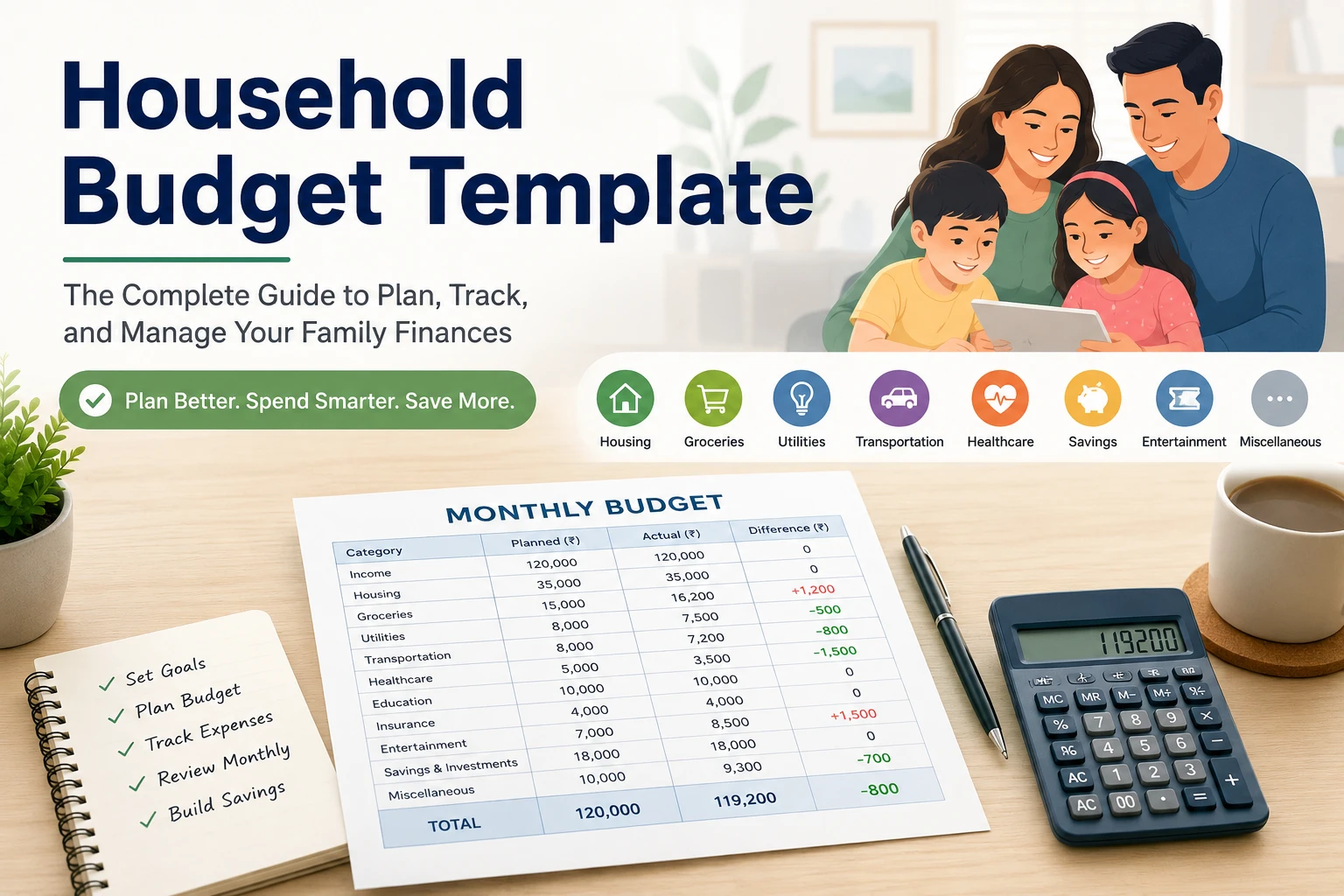
Example Household Budget Template
Use our free household budget calculator to enter your own amounts and calculate your monthly savings. The example below is a starting point you can copy into a spreadsheet.
To understand how a household budget works in practice, let's look at a realistic example. The figures below represent a family of four with a monthly household income of ₹1,20,000. Your own budget will naturally differ depending on your income, location, and financial goals, but the same principles apply regardless of how much you earn.
Category
Planned Budget
Actual Spending
Difference
Income
₹1,20,000
₹1,20,000
₹0
Housing (Rent/Mortgage)
₹35,000
₹35,000
₹0
Groceries
₹15,000
₹16,200
+₹1,200
Utilities
₹8,000
₹7,500
-₹500
Transportation
₹8,000
₹7,200
-₹800
Healthcare
₹5,000
₹3,500
-₹1,500
Education
₹10,000
₹10,000
₹0
Insurance
₹4,000
₹4,000
₹0
Entertainment
₹7,000
₹8,500
+₹1,500
Savings & Investments
₹18,000
₹18,000
₹0
Miscellaneous
₹10,000
₹9,300
-₹700
Total Expenses
₹1,20,000
₹1,19,200
-₹800
How to Read This Budget
This example highlights one of the biggest advantages of using a household budget template: you can immediately see where your spending differs from your original plan.
In this example:
Grocery spending exceeded the planned budget by ₹1,200.
Entertainment expenses were ₹1,500 higher than expected.
Lower spending on utilities, transportation, healthcare, and miscellaneous expenses balanced out the extra spending elsewhere.
The family still met its savings goal because savings were treated as a fixed monthly commitment rather than an afterthought.
Without comparing planned and actual spending, these trends are easy to miss. Over several months, small overruns in categories like groceries or dining out can significantly impact your ability to save.
Every Budget Will Look Different
Your own household budget doesn't need to match the example above.
For instance:
A couple without children may spend less on education and groceries but more on travel or dining out.
A homeowner with a mortgage may allocate more toward housing than someone renting.
Families living in metropolitan cities often have higher transportation and housing costs than those in smaller towns.
Someone working from home may spend less on commuting but more on electricity and internet.
The purpose of a budget template isn't to follow someone else's numbers—it's to create a financial plan that reflects your own priorities and lifestyle.
Review Your Budget Every Month
A budget should never be a one-time exercise.
At the end of each month, compare your planned budget with your actual spending and ask yourself:
Which categories stayed within budget?
Where did you consistently overspend?
Which expenses surprised you?
Can any unnecessary spending be reduced next month?
Are you saving enough to reach your financial goals?
These monthly reviews help you improve your budgeting accuracy over time. After just a few months, you'll have a much clearer understanding of your household's spending patterns, making future budgeting faster, more realistic, and far less stressful.
How to Use a Household Budget Template
Having a household budget template is only the first step. The real value comes from using it consistently. A budget isn't meant to restrict your spending—it's designed to help you spend with purpose and confidence.
An easy way to approach budgeting is to follow this simple five-step framework:
Plan → Allocate → Track → Review → Improve
Let's look at each step in detail.
Step 1: Plan Your Monthly Income
Start by calculating the total money your household expects to receive during the month.
Include all reliable sources of income, such as:
Salaries
Freelance or business income
Rental income
Pension
Government benefits
Other recurring income
If your income varies from month to month, use your average income from the past three to six months rather than your highest-earning month. This helps create a more realistic budget and reduces the risk of overspending.
Step 2: Allocate Money to Every Category
Once you know how much money is coming in, assign every rupee a purpose before the month begins.
Start with essential expenses:
Housing
Groceries
Utilities
Transportation
Healthcare
Insurance
Then allocate money toward:
Savings
Investments
Debt repayment
Entertainment
Personal spending
Miscellaneous expenses
Your goal is for every rupee of income to have a designated purpose. This doesn't mean spending everything—it means intentionally deciding how much will be spent, saved, or invested.
Step 3: Track Your Spending Throughout the Month
A budget only works if you compare it against your actual spending.
Instead of waiting until the end of the month, record expenses regularly. Even updating your budget every few days makes it much easier to identify overspending before it becomes a problem.
For example:
Bought groceries? Update the grocery category.
Paid your electricity bill? Record it under utilities.
Went out for dinner? Add it to entertainment.
Small, consistent updates are far more effective than trying to remember an entire month's spending all at once.
Step 4: Review Your Budget at Month-End
At the end of the month, compare your planned budget with your actual expenses.
Ask yourself:
Which categories stayed within budget?
Where did you overspend?
Which expenses were lower than expected?
Did you achieve your savings goal?
Were there any unexpected expenses you should budget for next month?
This review helps you understand your spending habits instead of simply recording transactions.
Step 5: Improve Next Month's Budget
No budget is perfect the first time.
If you consistently spend more on groceries than planned, increase that category and reduce spending elsewhere instead of setting unrealistic targets.
Likewise, if you regularly have money left over in certain categories, consider redirecting those funds toward:
Emergency savings
Investments
Debt repayment
Long-term financial goals
Budgeting is an ongoing process. Each month provides new insights that help you create a more accurate and sustainable financial plan.
Pro Tips for Successful Budgeting
To get the most from your household budget template:
Review your budget at the same time each week.
Include every household member in financial discussions.
Budget for irregular annual expenses by saving a small amount each month.
Avoid making large spending decisions without checking your remaining budget.
Treat savings as a monthly priority—not whatever is left over.
Keep your budget simple. Too many categories make it difficult to maintain consistently.
Remember, the best budget isn't the most detailed one—it's the one you can stick to month after month. Consistency will always have a greater impact on your financial health than creating the "perfect" budget.
Common Household Budgeting Mistakes (And How to Avoid Them)
Creating a household budget is an excellent first step, but sticking to it can be challenging. Many budgets fail not because the template is ineffective, but because of small habits that gradually throw the plan off track.
The good news is that most budgeting mistakes are easy to fix once you recognize them. Here are some of the most common pitfalls and practical ways to avoid them.
1. Setting Unrealistic Spending Limits
One of the biggest mistakes people make is creating an ideal budget instead of a realistic one.
For example, if your household typically spends ₹18,000 on groceries each month, setting a grocery budget of ₹10,000 is unlikely to succeed. Instead of encouraging better spending habits, unrealistic targets often lead to frustration and abandoned budgets.
How to avoid it:
Review your spending from the last three to six months.
Use historical averages as your starting point.
Reduce spending gradually rather than making drastic cuts.
A realistic budget is far more sustainable than a perfect one.
2. Forgetting Irregular Expenses
Many households budget only for recurring monthly bills while forgetting expenses that occur once or twice a year.
These may include:
Vehicle servicing
Festival shopping
Birthday celebrations
School admissions
Insurance renewals
Home repairs
Holiday travel
When these expenses eventually arise, they often disrupt the entire monthly budget.
How to avoid it:
Estimate the annual cost of these expenses and divide it by twelve. Set aside a small amount each month so you're financially prepared when the bill arrives.
3. Tracking Expenses Inconsistently
Even the best household budget template won't help if it isn't updated regularly.
Many people start the month with enthusiasm but stop recording expenses after the first week. By the end of the month, they struggle to remember where their money went.
How to avoid it:
Develop a simple routine.
Record expenses daily or every few days.
Set aside five minutes each evening or one weekly review session.
Encourage everyone in the household to update shared expenses.
Small, consistent updates are much easier than trying to reconstruct an entire month's spending.
4. Treating Savings as an Afterthought
A common budgeting habit is spending first and saving whatever remains. Unfortunately, there often isn't much left.
Successful households reverse this approach by treating savings as a fixed monthly commitment.
How to avoid it:
As soon as you receive your income:
Transfer money to your emergency fund.
Invest in SIPs or retirement accounts.
Pay down high-interest debt.
By prioritizing savings, you're more likely to make steady progress toward your financial goals.
5. Budgeting Alone Instead of Together
In many families, one person manages the finances while everyone else continues spending without understanding the household budget.
This lack of communication often leads to confusion, duplicated purchases, or unexpected expenses.
How to avoid it:
Schedule a short monthly budget review with your partner or family members.
Discuss:
Upcoming expenses
Financial goals
Changes in income
Areas where spending can be reduced
Budgeting works best when everyone understands the plan and contributes to achieving it.
6. Never Reviewing the Budget
A household budget isn't something you create once and forget.
Your income, expenses, and priorities will change over time. If your budget never changes, it quickly becomes inaccurate.
How to avoid it:
At the end of each month, ask yourself:
Which categories stayed within budget?
Where did we overspend?
Which expenses surprised us?
What can we improve next month?
These regular reviews help transform budgeting from a static document into a practical financial planning tool.
Remember: Progress Matters More Than Perfection
It's normal for your budget to change over time. Unexpected expenses, salary increases, family milestones, and inflation all affect your household finances.
The goal isn't to create a perfect budget—it's to build a budgeting habit that helps your family make better financial decisions month after month.
A simple, consistently maintained household budget template will always deliver better results than a detailed budget that's forgotten after the first week.
Frequently Asked Questions
Is a household budget template better than a spreadsheet?
A household budget template is often created using a spreadsheet, printable worksheet, or budgeting app. The best option depends on your preferences. Spreadsheets offer flexibility and customization, while budgeting apps make it easier to track expenses, collaborate with family members, and monitor your budget on the go. If you're just getting started, a simple template is an excellent first step.
How often should I update my household budget?
Ideally, you should update your household budget whenever you have a significant expense or at least once a week. Regular updates help you compare your planned budget with your actual spending, making it easier to identify overspending before the end of the month.
What is the 50/30/20 budgeting rule?
The 50/30/20 rule suggests allocating approximately 50% of your income to essential needs, 30% to discretionary spending, and 20% to savings or debt repayment. While it's a useful starting point, every household is different. Your budget should reflect your income, financial goals, and cost of living rather than following a fixed formula.
What expenses should every household budget include?
Most household budgets should include:
Income
Housing
Groceries
Utilities
Transportation
Healthcare
Education
Insurance
Entertainment
Savings and investments
Miscellaneous expenses
You can add or remove categories depending on your family's lifestyle and financial priorities.
Can couples or families share the same budget?
Yes. In fact, a shared household budget often improves communication and helps everyone stay aligned on financial goals. Whether you're managing finances as a couple or as a family, reviewing your budget together regularly makes it easier to plan for upcoming expenses and split household costs fairly.
What's the difference between budgeting and expense tracking?
Budgeting is the process of planning how you'll spend your money before the month begins. Expense tracking involves recording what you've actually spent. The two work best together: your budget sets spending limits, while expense tracking helps you measure whether you're staying within those limits.
Key Takeaways
Plan your spending before the month begins.
Include both fixed and variable expenses.
Budget for irregular yearly expenses.
Review your budget every month.
Adjust your budget based on actual spending.
Consistency matters more than perfection.
Track your household budget with HomeLedger
Plan monthly budgets, track shared expenses, and keep every family member aligned. Available on Android and in web preview.
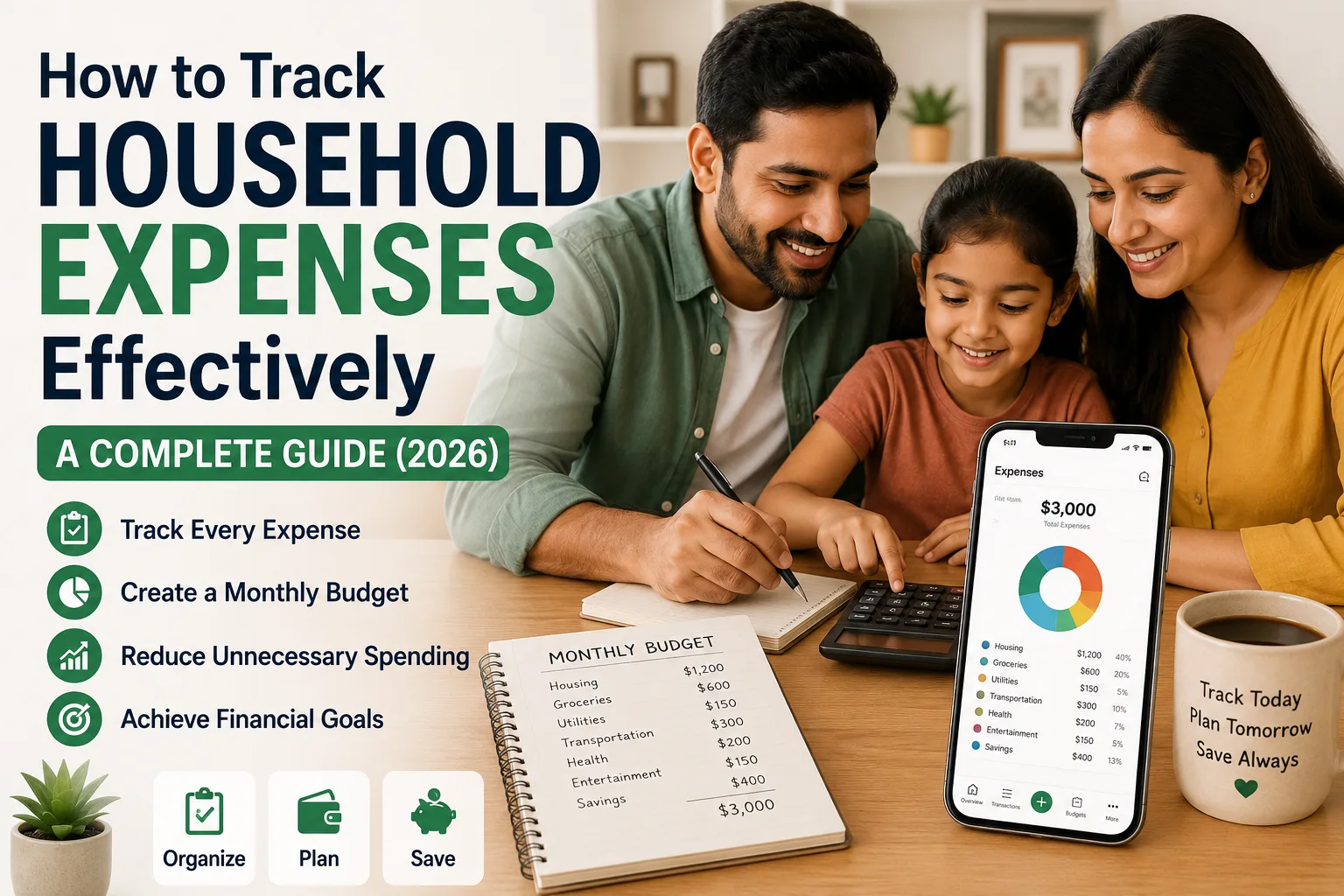
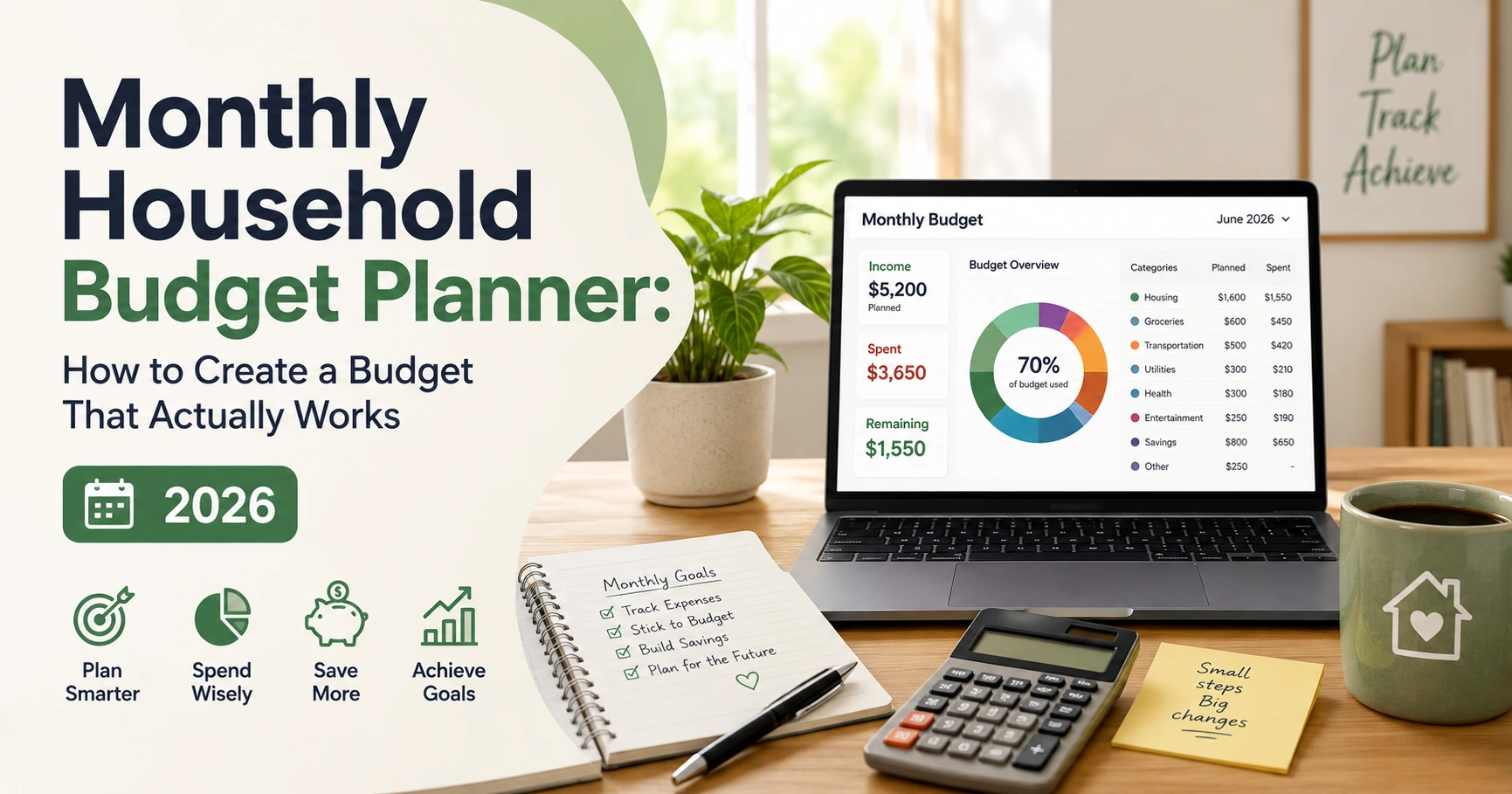
Learn how to create a monthly household budget planner, organize your expenses, set realistic spending limits, and build better financial habits for your family.
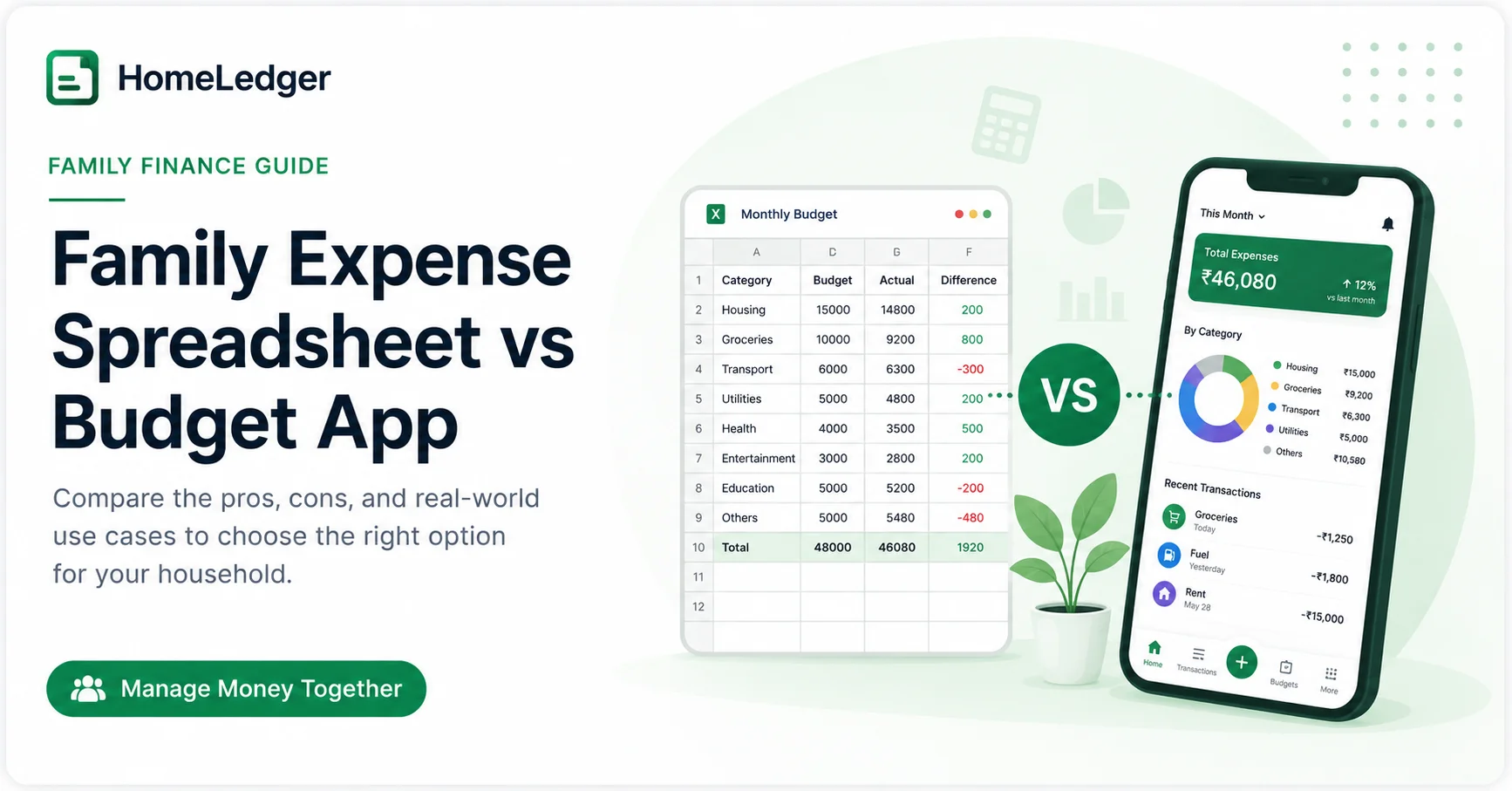
Trying to decide between a family expense spreadsheet and a budgeting app? Compare the pros, cons, and real-world use cases to choose the right option for your household.