The workbook includes a 50-row shared expense log, editable contribution percentages, automatic shares for each partner, a validation column and a settlement dashboard. Enter each partner's payments and the first partner's agreed share (50% for equal splitting). The second partner's share is the remainder. The dashboard shows who owes whom; correct any rows marked CHECK before making payments. The sample entries are hypothetical, and there is no registration required.
Managing money as a couple isn't just about splitting bills—it's about building trust, working toward shared goals, and making financial decisions together. Whether you're newly married, living together, or simply sharing household expenses, having a clear system for managing money can help reduce stress and avoid misunderstandings.
Many couples start by keeping mental notes of who paid for dinner, groceries, or utility bills. Over time, however, these small expenses become difficult to track. Questions like "Didn't I pay last time?" or "Who's covering the internet bill this month?" become more common, making shared finances feel more complicated than they need to be.
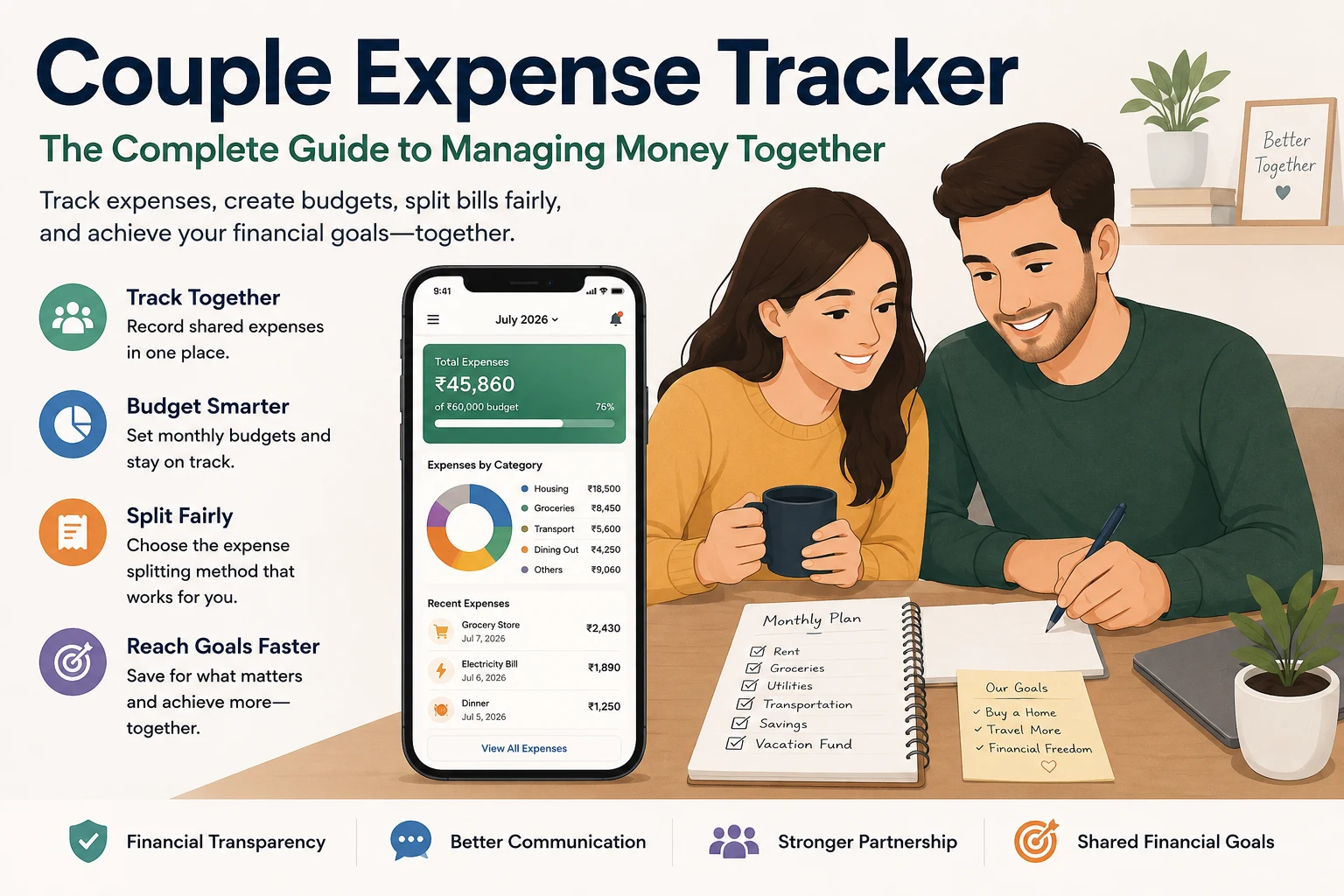
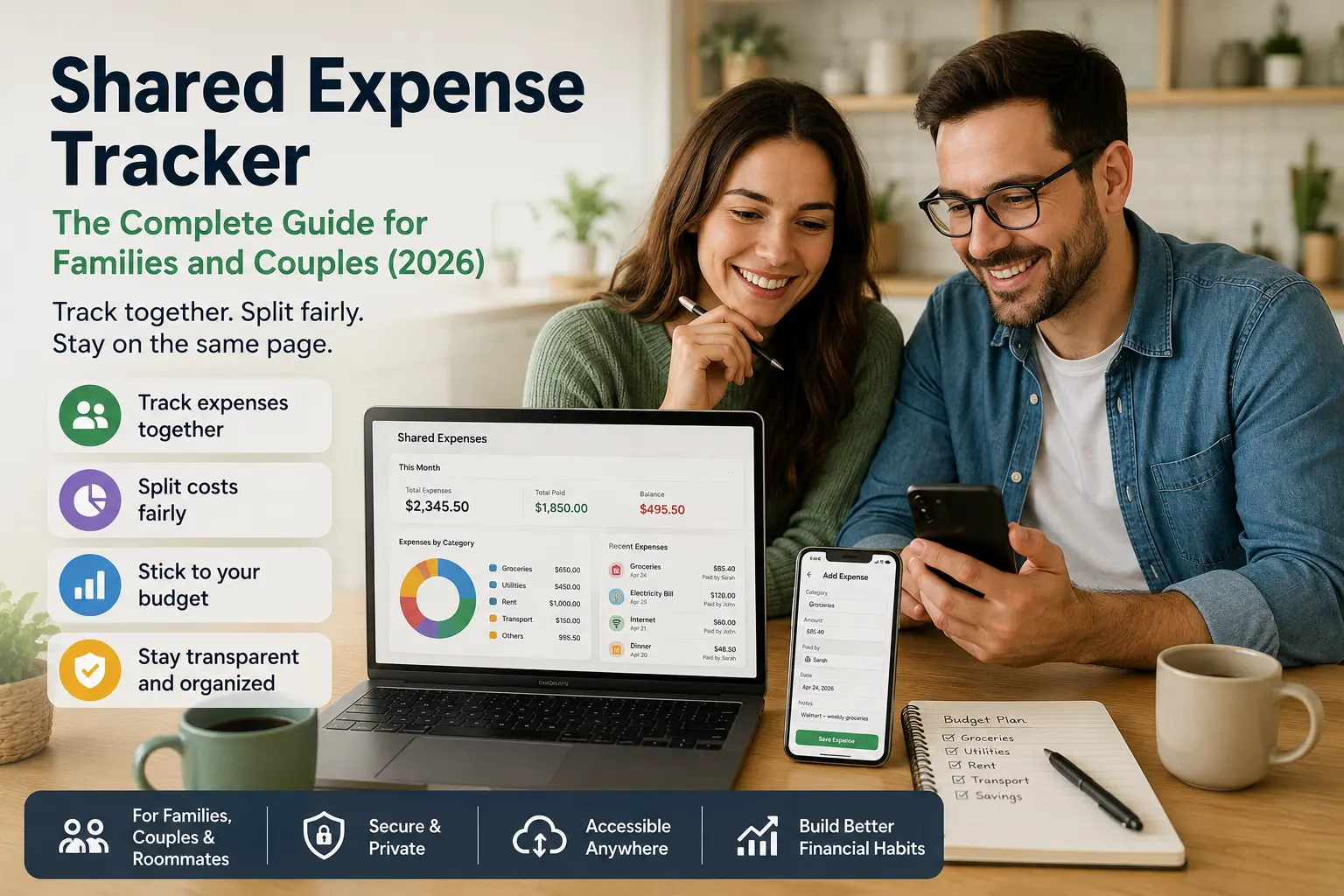
A couple expense tracker provides a simple way to organize shared spending. Instead of relying on memory or scattered messages, both partners can see where money is going, how much has been spent, and whether they're staying within their budget. More importantly, it encourages open conversations about finances, helping couples work together instead of keeping separate records.
In this guide, you'll learn why tracking expenses together matters, explore different ways couples manage shared finances, discover the features to look for in a couple expense tracker, and learn practical strategies to build healthy financial habits that last.
Why Money Is One of the Biggest Challenges for Couples
Every couple has a unique approach to managing money. Some combine all of their finances into a joint account, while others keep separate accounts and use a shared expense tracker to split costs. Neither approach is inherently better—the key is having a system that both partners understand and trust.
Financial challenges often arise not because couples earn too little, but because expectations aren't clearly communicated. When one partner assumes expenses are being shared equally while the other believes they're contributing more, even small purchases can become a source of frustration over time.
Here are a few common situations many couples encounter:
One partner pays for groceries while the other covers rent, making it difficult to know if expenses are balanced.
Shared subscriptions, utility bills, and dining expenses are spread across multiple bank accounts or credit cards.
Large upcoming expenses—such as vacations, weddings, or home purchases—aren't planned together.
Daily expenses are forgotten, leading to disagreements about who paid for what.
One partner actively tracks finances while the other rarely reviews spending.
These situations are completely normal, especially when couples are managing busy lives. The problem isn't the spending itself—it's the lack of visibility.
Shared Financial Goals Require Shared Visibility
Money isn't just about paying today's bills. Most couples are also working toward long-term goals, such as:
Building an emergency fund
Saving for a home
Planning a wedding
Paying off debt
Taking annual vacations
Investing for retirement
Without a shared view of income and expenses, it becomes much harder to understand whether you're making progress toward those goals.
A simple expense tracking system gives both partners the same financial picture. Instead of relying on memory or individual bank statements, you can review your spending together, identify unnecessary expenses, and make informed decisions as a team.
Transparency Builds Trust
Healthy financial habits are built on transparency rather than constant calculations.
When both partners can see shared expenses, upcoming bills, and monthly spending, there are fewer surprises and fewer assumptions. Regularly reviewing finances together also creates opportunities to celebrate progress, whether that's staying within budget, reaching a savings milestone, or paying off debt faster than expected.
The goal of using a couple expense tracker isn't to monitor each other's spending—it's to create a shared understanding of your household finances so you can make confident financial decisions together.
Benefits of Tracking Expenses Together
Tracking expenses as a couple is about more than knowing who paid for dinner or the electricity bill. It creates financial transparency, encourages better communication, and helps both partners work toward shared goals with confidence.
Whether you're newly married, living together, or planning a future together, a couple expense tracker makes managing shared finances significantly easier.
Improve Financial Transparency
One of the biggest advantages of tracking expenses together is complete visibility into your household finances.
Instead of maintaining separate records or relying on memory, both partners can see:
Monthly income
Shared expenses
Upcoming bills
Savings progress
Spending by category
This transparency reduces confusion and helps both partners make informed financial decisions.
Stay Within Your Budget
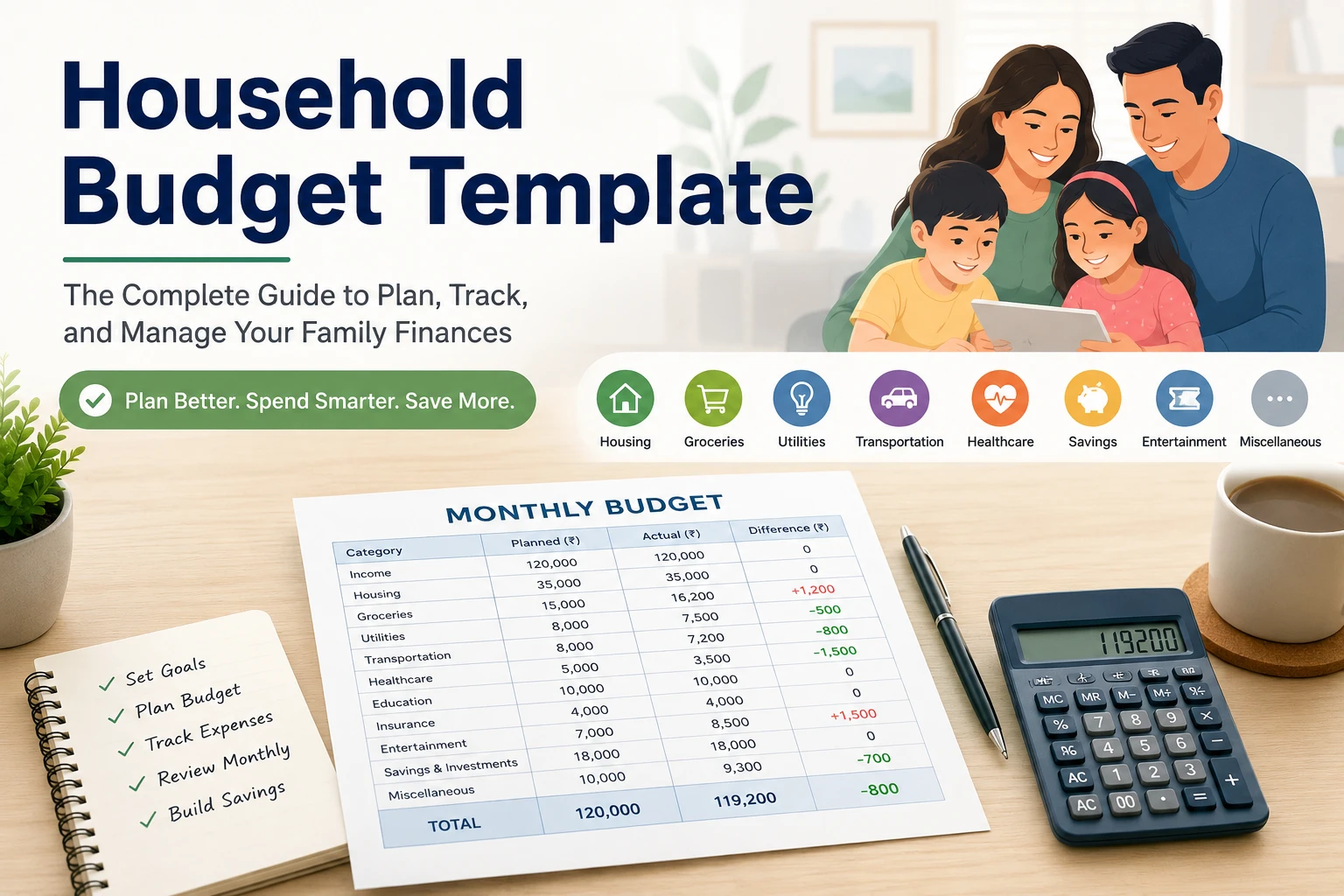
Creating a household budget is only effective if you regularly compare it with your actual spending.
Tracking expenses together allows couples to quickly identify:
Categories where they're overspending
Unexpected expenses
Areas where money can be saved
Opportunities to adjust spending before the month ends
Rather than reviewing finances after the money has already been spent, couples can make small adjustments throughout the month.
Reduce Financial Misunderstandings
Many disagreements about money stem from assumptions rather than actual spending.
Questions like:
"Didn't I pay for groceries last week?"
"Who paid the internet bill?"
"Are we staying within budget?"
become much easier to answer when every shared expense is recorded in one place.
Expense tracking removes guesswork and replaces it with clear, shared information.
Work Toward Shared Financial Goals
Whether you're saving for a vacation, a wedding, a home, or simply building an emergency fund, shared financial goals require consistent planning.
Tracking expenses together helps couples understand:
How much they're saving each month
Which expenses can be reduced
Whether they're on track to reach their goals
Instead of viewing budgeting as a restriction, couples begin to see it as a tool that supports the life they're building together.
Common Ways Couples Split Expenses
There's no single "correct" way for couples to split household expenses. The best approach depends on your incomes, financial priorities, and personal preferences.
The important thing is choosing a system that feels fair and is easy for both partners to maintain.
Here are the four most common methods.
1. Split Everything 50/50
In this approach, every shared expense is divided equally.
For example:
Rent
Utilities
Groceries
Internet
Entertainment
Each partner contributes the same amount regardless of income.
Best for:
Couples with similar incomes.
Partners who prefer equal contributions.
Pros
Easy to understand.
Simple to calculate.
Encourages equal responsibility.
Cons
May feel unfair if one partner earns significantly more.
2. Contribute Based on Income
Instead of splitting expenses equally, each partner contributes according to their income.
For example:
Partner A earns ₹80,000 per month.
Partner B earns ₹40,000 per month.
Instead of paying 50% each, they may contribute approximately:
Partner A: 67%
Partner B: 33%
This approach keeps the financial burden proportional to each person's earnings.
Best for:
Couples with different income levels.
Pros
More equitable.
Reduces financial pressure.
Supports long-term budgeting.
Cons
Requires honest conversations about income.
3. Use a Joint Account
Many married couples contribute a fixed amount to a shared bank account each month.
This account is used for:
Rent
Utilities
Groceries
Insurance
Household expenses
Personal spending remains separate.
Best for:
Married couples.
Long-term partners.
Families managing household finances.
Pros
Simplifies bill payments.
Clear separation between shared and personal expenses.
Cons
Requires regular contributions from both partners.
4. Use a Hybrid System
A hybrid approach combines multiple methods.
For example:
Housing is split based on income.
Groceries are paid from a joint account.
Personal expenses remain separate.
Entertainment is alternated each month.
This flexible system allows couples to adapt as their financial situation changes.
Best for:
Couples with complex financial arrangements.
Long-term relationships.
Families with children.
There isn't a universally "best" method. The right choice is the one that both partners understand, agree on, and can maintain consistently.
Choosing an expense-sharing method isn't just about mathematics—it's about creating a system that feels fair to both partners.
Before deciding how to split expenses, discuss questions like:
Do we have similar incomes?
Do we have shared financial goals?
Should personal spending remain separate?
How often will we review our finances?
How will we handle unexpected expenses?
The answers will help determine which method best suits your relationship.
Whatever approach you choose, consistency matters more than perfection. A simple system that both partners follow every month is far more effective than a complicated arrangement that's difficult to maintain.
It's also important to review your system regularly. Salary changes, moving to a new home, having children, or taking on new financial commitments may require adjustments over time.
Features to Look for in a Couple Expense Tracker
Not all expense trackers are designed for shared finances. If you're choosing a family expense tracker for managing money together, look for features that make collaboration simple rather than adding extra work.
Shared Household Access
Both partners should be able to record expenses and view the same financial information without maintaining separate records.
Budget Planning
The ability to create monthly budgets helps couples compare planned spending with actual expenses and stay on track.
Expense Categories
Organizing spending into categories such as groceries, housing, transportation, entertainment, and healthcare makes it easier to identify spending patterns.
Reports and Insights
Visual summaries and spending reports help couples understand where their money is going and identify opportunities to save.
Multiple Accounts
If your household uses separate bank accounts, cash, or investment accounts, your expense tracker should allow you to manage them in one place.
Simple Daily Expense Entry
The easier it is to record an expense, the more likely both partners are to use the app consistently.
Remember, the best couple expense tracker isn't the one with the most features—it's the one that both partners are happy to use every day.
Common Mistakes Couples Make When Managing Money Together
Managing money as a couple isn't about finding a perfect system—it's about building habits that work for both partners. Even with the best intentions, many couples make small mistakes that lead to confusion, overspending, or unnecessary financial stress.
Here are some of the most common mistakes and how to avoid them.
1. Avoiding Conversations About Money
Many couples hesitate to discuss finances because they fear disagreements or assume everything is working fine. Over time, this lack of communication can lead to different expectations about spending, saving, and financial priorities.
How to avoid it:
Schedule a monthly financial check-in to review your budget, upcoming expenses, and progress toward shared goals. Regular conversations are far easier than trying to resolve misunderstandings later.
2. Not Tracking Shared Expenses
It's easy to remember large expenses like rent, but smaller purchases—groceries, subscriptions, fuel, or dining out—often go unrecorded.
Without a shared record, couples may unintentionally underestimate how much they're spending each month.
How to avoid it:
Record shared expenses as they happen. Consistent tracking gives both partners an accurate picture of household spending.
3. Choosing an Unfair Expense Split
Splitting every expense 50/50 isn't always the fairest approach, especially when one partner earns significantly more than the other.
The goal isn't equal contributions—it's creating a system that feels fair to both people.
How to avoid it:
Review your incomes, financial responsibilities, and long-term goals together before deciding how expenses should be shared.
4. Ignoring Long-Term Financial Goals
Day-to-day expenses often receive the most attention, while bigger goals are postponed indefinitely.
Saving for a home, paying off debt, building an emergency fund, or planning a vacation all require consistent contributions over time.
How to avoid it:
Include savings goals in your monthly budget and review your progress together regularly.
5. Never Reviewing Your Budget
A budget isn't something you create once and forget.
Income changes, new expenses arise, and financial priorities evolve throughout different stages of life.
How to avoid it:
Review your household budget at the end of every month. Celebrate what's working, identify areas for improvement, and adjust your budget for the following month.
Remember, successful couples don't avoid financial challenges—they create systems that help them manage those challenges together.
Calculate shared monthly contributions
Use the free couple budget calculator to compare equal and income-proportional contributions to shared expenses and savings goals. It complements the downloadable expense log, which tracks actual payments.
Frequently Asked Questions
What is the best way for couples to track shared expenses?
The best approach is to use a shared expense tracking system that both partners can update regularly. Whether you use a spreadsheet or a dedicated expense tracking app, consistency is more important than the tool itself.
Should couples split expenses 50/50?
Not necessarily. While a 50/50 split works well for couples with similar incomes, many prefer contributing proportionally based on income. The best method is one that both partners consider fair and sustainable.
Is it better to have a joint bank account?
A joint account can simplify paying shared household expenses, but it isn't required. Many couples successfully manage finances using separate accounts, a joint account, or a combination of both.
How often should couples review their budget?
A monthly review is ideal. It gives both partners an opportunity to compare planned spending with actual expenses, discuss upcoming financial commitments, and adjust their budget if necessary.
What's the difference between a couple expense tracker and a family expense tracker?
A couple expense tracker focuses on managing shared finances between two partners. A family expense tracker typically includes additional household members, shared budgets, multiple accounts, and broader household financial planning. The underlying budgeting principles remain the same.
Can couples keep separate finances and still budget together?
Absolutely. Many couples maintain separate personal accounts while sharing responsibility for household expenses. A shared budget simply provides visibility into common expenses without requiring every aspect of your finances to be combined.
Conclusion
Managing money together doesn't have to be complicated. With open communication, a fair approach to sharing expenses, and consistent budgeting habits, couples can reduce financial stress and make better decisions together.
Whether you choose to split expenses equally, contribute based on income, or use a hybrid approach, the most important factor is having a system that both partners understand and trust. Regularly tracking expenses, reviewing your budget, and working toward shared financial goals helps create a stronger financial foundation for your relationship.
If you're looking for an easier way to manage shared finances, HomeLedger is designed to help couples and families budget together, track expenses in one place, and stay aligned on their financial goals. Instead of juggling spreadsheets or wondering who paid for what, you can focus on building healthy financial habits together.
Track your household budget with HomeLedger
Plan monthly budgets, track shared expenses, and keep every family member aligned. Available on Android and in web preview.
Learn how to track shared expenses with your partner, family, or roommates. Discover the best ways to split expenses, manage household budgets, and stay financially organized.
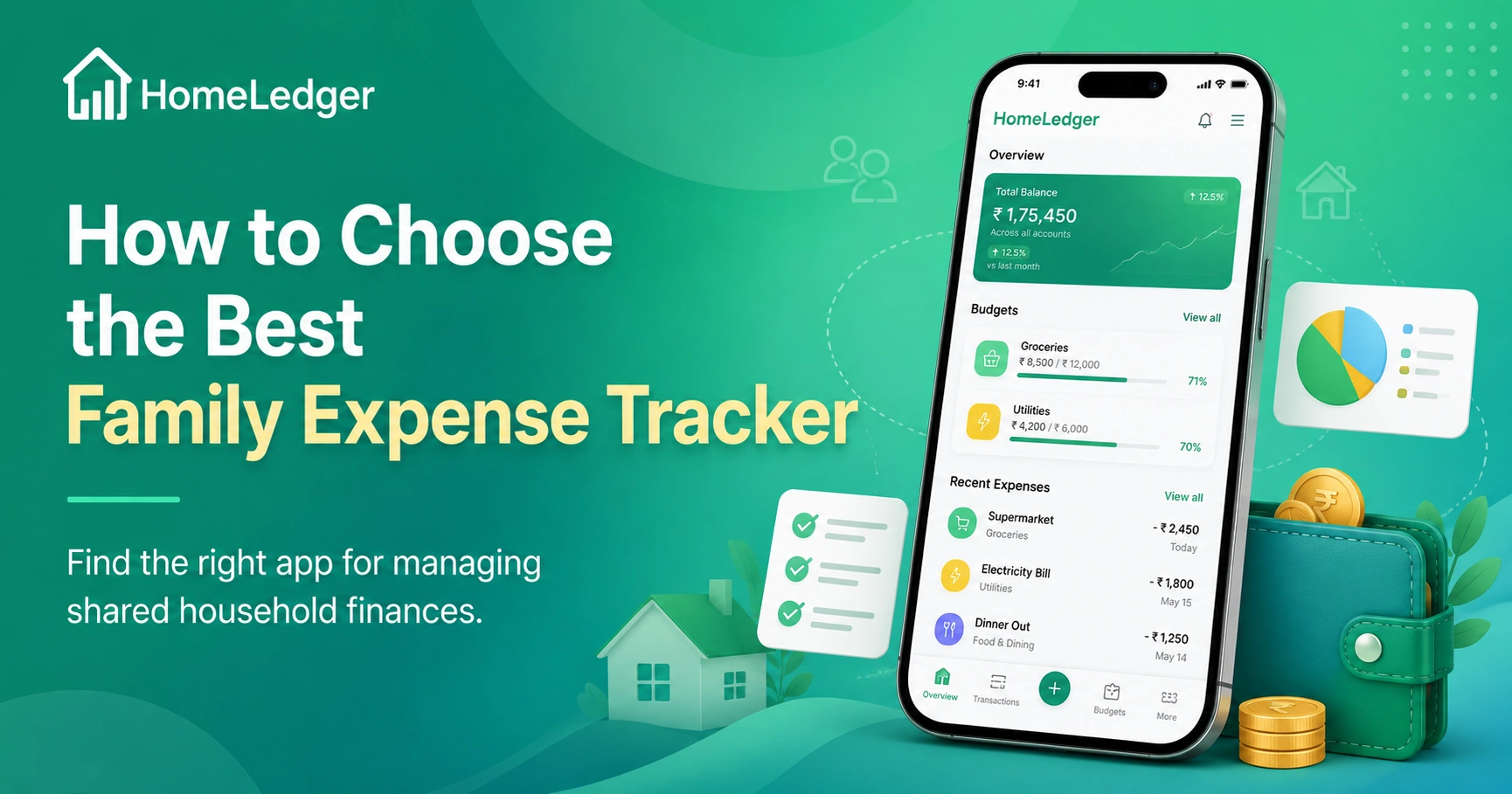
Find a family expense tracker that fits your household: compare shared access, monthly budgets, recurring bills, account tracking and privacy using a practical checklist.