Managing a household budget becomes much easier when every expense has a clear place. Without well-defined budget categories, it's easy to underestimate spending, overlook recurring expenses, or lose track of where your money is actually going.
Whether you're budgeting for yourself, your partner, or your entire family, using a family budget app to organize expenses into meaningful categories provides a clear picture of your financial habits. It helps you identify areas where you're overspending, plan for future expenses, and make more informed financial decisions every month.
Many families focus on creating a budget but struggle to maintain it because they haven't categorized their spending effectively. For example, groceries, transportation, healthcare, and entertainment all have different spending patterns. Treating them as one large expense makes it difficult to understand where adjustments should be made.
In this guide, you'll learn the essential budget categories every family should include, how to organize them effectively, and practical tips for creating a budget that's realistic, flexible, and easy to maintain.
Quick Summary
- Every household budget should be organized into clear spending categories.
- Fixed and variable expenses should be tracked separately.
- Budget categories help identify overspending and improve financial planning.
- Review and adjust your categories regularly as your family's needs change.
- A well-organized budget is easier to maintain than a detailed but inconsistent one.
Why Budget Categories Matter
Creating a budget isn't just about limiting your spending—it's about understanding where your money goes every month. Budget categories provide a simple structure that helps families organize expenses, identify spending patterns, and make better financial decisions.
Without clear categories, all expenses become one long list of transactions. While you may know how much you've spent overall, it's difficult to answer questions like:
- Are grocery costs increasing every month?
- How much are we spending on entertainment?
- Are we saving enough for future goals?
- Which expenses are consuming most of our income?
Organizing expenses into categories answers these questions immediately.
Better Financial Awareness
Budget categories give every expense a purpose.
Instead of simply recording that ₹45,000 was spent this month, you'll understand how that money was distributed across housing, groceries, transportation, healthcare, savings, and other priorities.
This visibility makes it easier to identify unnecessary spending and make informed adjustments before small habits become larger financial problems.
Easier Budget Planning
When expenses are categorized consistently, creating next month's budget becomes much simpler.
You'll have historical spending data that helps estimate realistic budgets rather than relying on guesswork.
For example, if your household consistently spends around ₹12,000 on groceries each month, you can create a more accurate grocery budget instead of choosing an arbitrary number.
Improved Financial Goals
Budget categories don't just track spending—they also highlight opportunities to save.
Knowing exactly how much you're spending in each category helps you redirect money toward important goals such as:
- Building an emergency fund
- Saving for a home
- Planning vacations
- Paying off debt
- Investing for the future
A well-organized budget helps every financial decision become more intentional.
Fixed vs Variable Budget Categories
Before creating your budget, it's helpful to separate expenses into two broad groups: fixed expenses and variable expenses.
Understanding the difference helps you identify which expenses are predictable and which require closer monitoring each month.
Fixed Expenses
Fixed expenses are costs that remain relatively consistent from month to month.
Examples include:
| Fixed Expense | Example |
|---|
| Rent or Mortgage | Monthly housing payment |
| Insurance | Health, life, or vehicle insurance |
| Loan Payments | Home loan, education loan, car loan |
| Internet | Monthly broadband plan |
| School Fees | Tuition or childcare payments |
Since these expenses rarely change, they're usually the easiest part of your budget to plan.
Variable Expenses
Variable expenses change depending on your lifestyle, season, or spending habits.
Examples include:
| Variable Expense | Example |
|---|
| Groceries | Food shopping |
| Transportation | Fuel, public transport |
| Dining Out | Restaurants and cafés |
| Entertainment | Movies, streaming, hobbies |
| Shopping | Clothing and personal purchases |
| Healthcare | Medicines or unexpected medical costs |
Variable expenses provide the greatest opportunity to save money because they're generally easier to adjust than fixed expenses.
The most effective household budgets include both types of expenses, ensuring that essential bills are covered while still allowing flexibility for everyday spending.
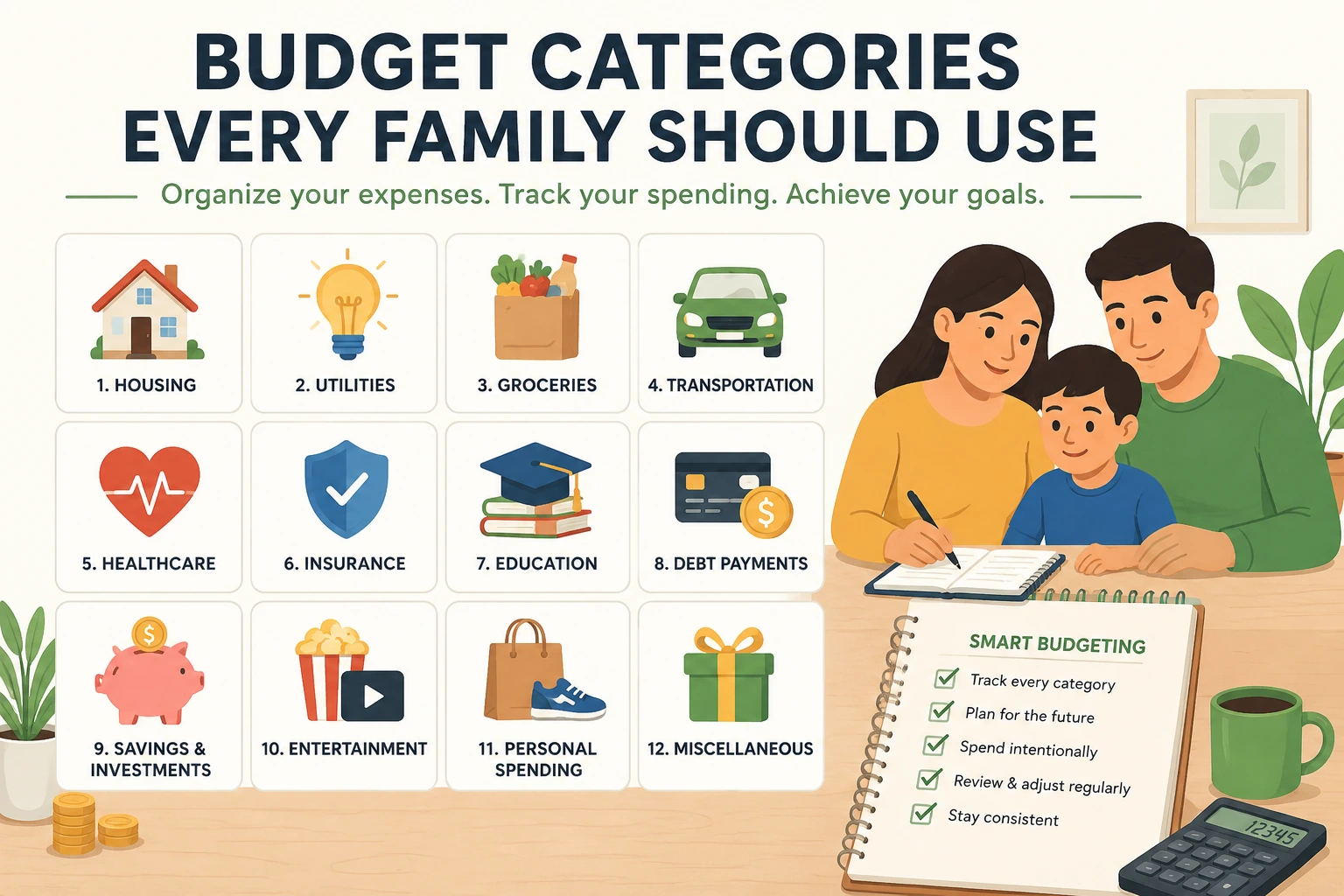
Essential Budget Categories Every Family Should Use
While every household is different, most families can build an effective budget using the following categories.
You don't need dozens of categories. Start with the essentials and expand only if your financial situation requires more detail.
1. Housing
Housing is usually the largest household expense.
Include costs such as:
- Rent or mortgage
- Property taxes
- Home maintenance
- Society or HOA fees
- Repairs
Keeping housing costs within a reasonable percentage of your income leaves more room for savings and other financial goals.
2. Utilities
Utility expenses keep your household running and should always have a dedicated budget category.
Examples include:
- Electricity
- Water
- Gas
- Internet
- Mobile phone bills
- Garbage collection
Although utility bills vary slightly each month, tracking them helps identify seasonal changes and unusual increases.
3. Groceries
Groceries are one of the most important variable expense categories for any family. For practical tips on planning meals, tracking purchases, and staying within budget, see our guide to building a grocery budget planner.
Include:
- Supermarket purchases
- Fresh fruits and vegetables
- Dairy products
- Household essentials
- Cleaning supplies
Tracking groceries separately makes it much easier to identify overspending and improve meal planning.
4. Transportation
Transportation expenses often include much more than fuel.
Consider budgeting for:
- Fuel
- Public transportation
- Vehicle maintenance
- Parking fees
- Toll charges
- Vehicle insurance (if not tracked separately)
Reviewing transportation expenses regularly may reveal opportunities to reduce commuting costs or improve travel planning.
5. Healthcare
Healthcare expenses are often unpredictable, making them one of the most important budget categories to track separately.
Include expenses such as:
- Doctor consultations
- Medicines
- Diagnostic tests
- Dental care
- Vision care
- Medical emergencies
Even if you have health insurance, setting aside a monthly healthcare budget can help cover out-of-pocket expenses and reduce financial stress when unexpected medical needs arise.
6. Insurance
Insurance protects your family's financial future and should always have its own category.
Common insurance expenses include:
- Health insurance
- Life insurance
- Vehicle insurance
- Home insurance
Since many insurance premiums are paid annually, consider dividing the yearly cost into a monthly amount to make budgeting easier.
7. Education
If you have children or are investing in your own learning, education deserves a dedicated budget category.
Examples include:
- School fees
- College tuition
- Books and stationery
- Online courses
- Coaching classes
- School activities
Tracking education expenses separately helps families prepare for recurring academic costs throughout the year.
8. Debt Repayments
If you're repaying loans, keeping debt payments in a separate category makes it easier to monitor progress.
Include:
- Home loan EMI
- Car loan EMI
- Personal loans
- Student loans
- Credit card repayments
Reviewing this category regularly can help you identify opportunities to pay off high-interest debt faster.
9. Savings & Investments
A good budget doesn't only track spending—it also prioritizes saving for the future.
This category may include:
- Emergency fund
- Fixed deposits
- Mutual funds
- Retirement savings
- Children's education fund
- Investment contributions
Treat savings like a recurring monthly expense instead of waiting to save whatever money remains at the end of the month.
10. Entertainment
Budgets should leave room for enjoyment.
Including entertainment as its own category helps families spend intentionally without feeling guilty.
Examples include:
- Movie tickets
- Streaming subscriptions
- Hobbies
- Weekend outings
- Family vacations
- Gaming
Planning entertainment expenses in advance often prevents impulse spending.
11. Personal Spending
Every family member has individual expenses that don't necessarily fit into shared household categories.
Examples include:
- Clothing
- Haircuts
- Gym memberships
- Personal shopping
- Gifts
- Beauty and grooming
Separating personal spending from household expenses creates greater transparency and reduces confusion when reviewing your budget.
12. Miscellaneous
No matter how carefully you plan, unexpected expenses will always arise.
A miscellaneous category provides flexibility for costs that don't fit elsewhere, such as:
- Home repairs
- Last-minute travel
- Small replacement purchases
- Festival expenses
- Unexpected household needs
Keeping a small buffer in this category helps prevent your entire budget from being disrupted by minor surprises.
How to Customize Your Budget Categories
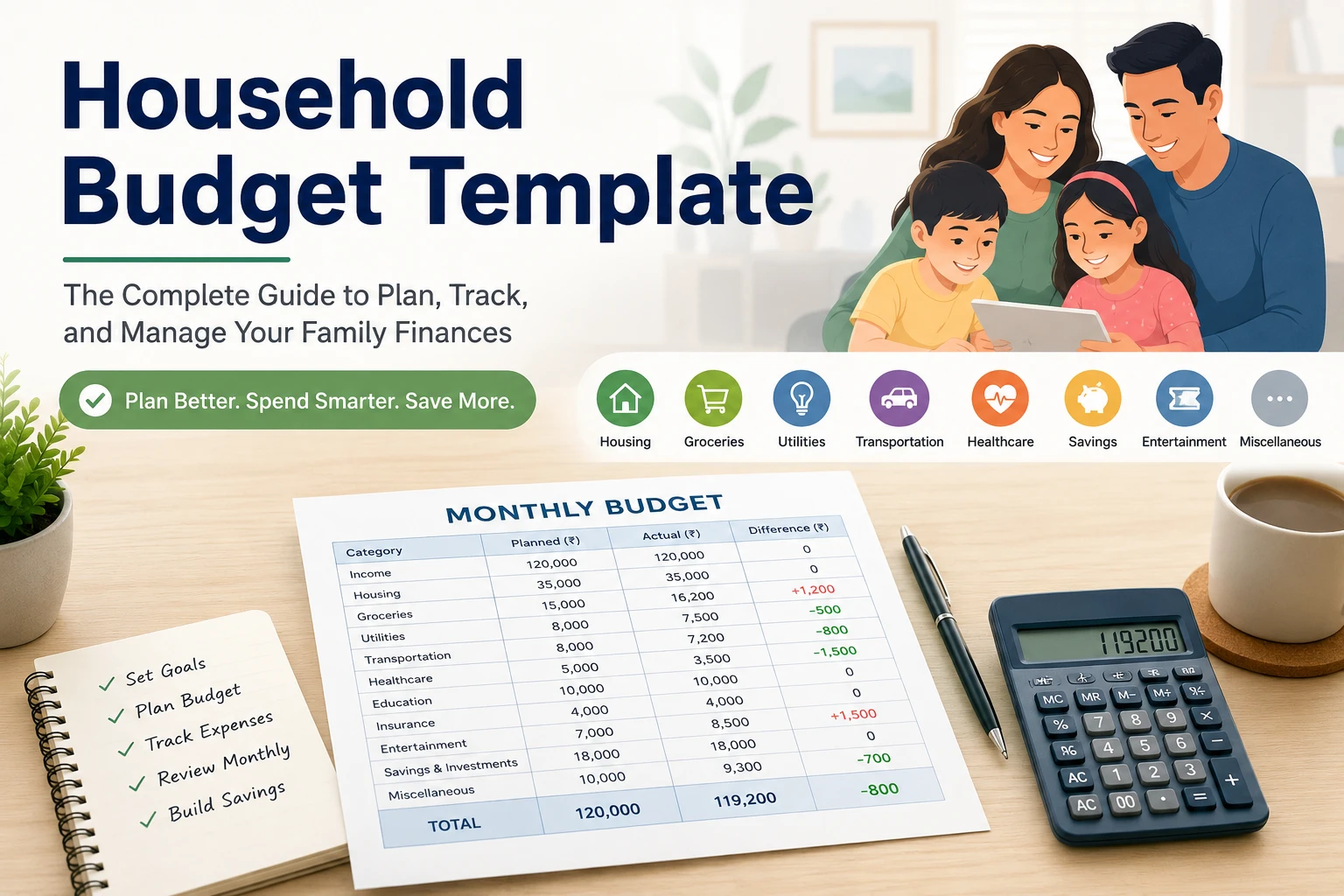
Use the free household budget calculator to see how category amounts affect monthly savings.
Every household is different, so your budget categories should reflect your family's lifestyle and financial priorities.
For example:
| Household Type | Additional Categories |
|---|
| Young Couple | Wedding savings, travel |
| Family with Children | Childcare, education, extracurricular activities |
| Homeowners | Home maintenance, property tax |
| Freelancers | Business expenses, taxes |
| Retirees | Healthcare, leisure, investments |
Start with the essential categories and add new ones only when they help you better understand your finances. Too many categories can make budgeting unnecessarily complicated, while too few may hide important spending patterns.
A simple, consistent budget is almost always more effective than a highly detailed budget that's difficult to maintain.
Common Budget Category Mistakes
Creating budget categories is only the first step. Many families still struggle because their categories don't accurately reflect how they spend money.
Avoid these common mistakes when organizing your household budget.
1. Creating Too Many Categories
Having dozens of budget categories may seem organized, but it often makes budgeting more complicated than necessary.
Instead of tracking every small purchase separately, group similar expenses together.
For example, rather than creating separate categories for coffee, snacks, and restaurants, combine them into a broader Dining Out category.
2. Mixing Personal and Household Expenses
When personal purchases and shared household expenses are recorded together, it becomes difficult to understand where the family's money is actually going.
If multiple family members contribute financially, keeping personal and household spending separate improves transparency and reduces confusion.
3. Forgetting Irregular Expenses
Many budgets focus only on monthly bills while ignoring expenses that occur once or twice a year.
Examples include:
- Insurance renewals
- Vehicle servicing
- School admissions
- Festival shopping
- Holiday travel
Planning for these expenses throughout the year helps avoid financial surprises.
4. Never Reviewing Categories
Your family's financial situation will change over time.
A category that made sense two years ago may no longer be relevant today.
Review your budget categories every few months and adjust them as your lifestyle evolves.
5. Treating Savings as an Afterthought
One of the biggest budgeting mistakes is saving whatever money remains at the end of the month.
Instead, include Savings & Investments as a fixed budget category and contribute to it consistently before discretionary spending.
Frequently Asked Questions
What are the main budget categories every family should have?
Most families should include categories for housing, utilities, groceries, transportation, healthcare, insurance, education, debt repayments, savings, entertainment, personal spending, and miscellaneous expenses.
How many budget categories should I use?
There is no perfect number, but most households can manage their finances effectively with around 10–15 well-defined categories. The goal is clarity, not complexity.
Should savings be a budget category?
Yes. Savings should be treated like any other recurring monthly expense. Setting aside money consistently is more effective than saving whatever is left over at the end of the month.
What's the difference between fixed and variable expenses?
Fixed expenses remain relatively consistent each month, such as rent or insurance. Variable expenses, like groceries, dining out, and entertainment, fluctuate depending on your spending habits.
Can I create my own budget categories?
Absolutely. Every household has unique financial priorities. Start with the essential categories and customize them to match your family's lifestyle, income, and financial goals.
Is a spreadsheet enough for tracking budget categories?
Spreadsheets work well for simple budgets, but as the number of transactions grows, they become harder to maintain. Many families eventually choose dedicated budgeting apps to simplify tracking and collaboration.
Key Takeaways
- Organizing expenses into categories makes budgeting easier and more accurate.
- Separate fixed expenses from variable expenses for better financial planning.
- Start with essential categories and customize them based on your household's needs.
- Review your budget categories regularly as your financial situation changes.
- Tracking spending consistently is more important than creating the perfect budget.
Conclusion
Well-defined budget categories are the foundation of every successful household budget. They help families understand where money is being spent, identify opportunities to save, and make more confident financial decisions throughout the year.
Remember that your budget doesn't need to be perfect from the beginning. Start with the essential categories, review your spending regularly using a monthly expense checklist, and adjust your budget as your family's needs evolve. A simple, consistent budgeting system is far more effective than an overly complicated one that's difficult to maintain.
Whether you use a spreadsheet or a dedicated budgeting app, the goal remains the same: give every expense a purpose and every financial goal a plan. With the right budget categories in place, managing your household finances using a household expense tracker becomes simpler, more organized, and far less stressful.