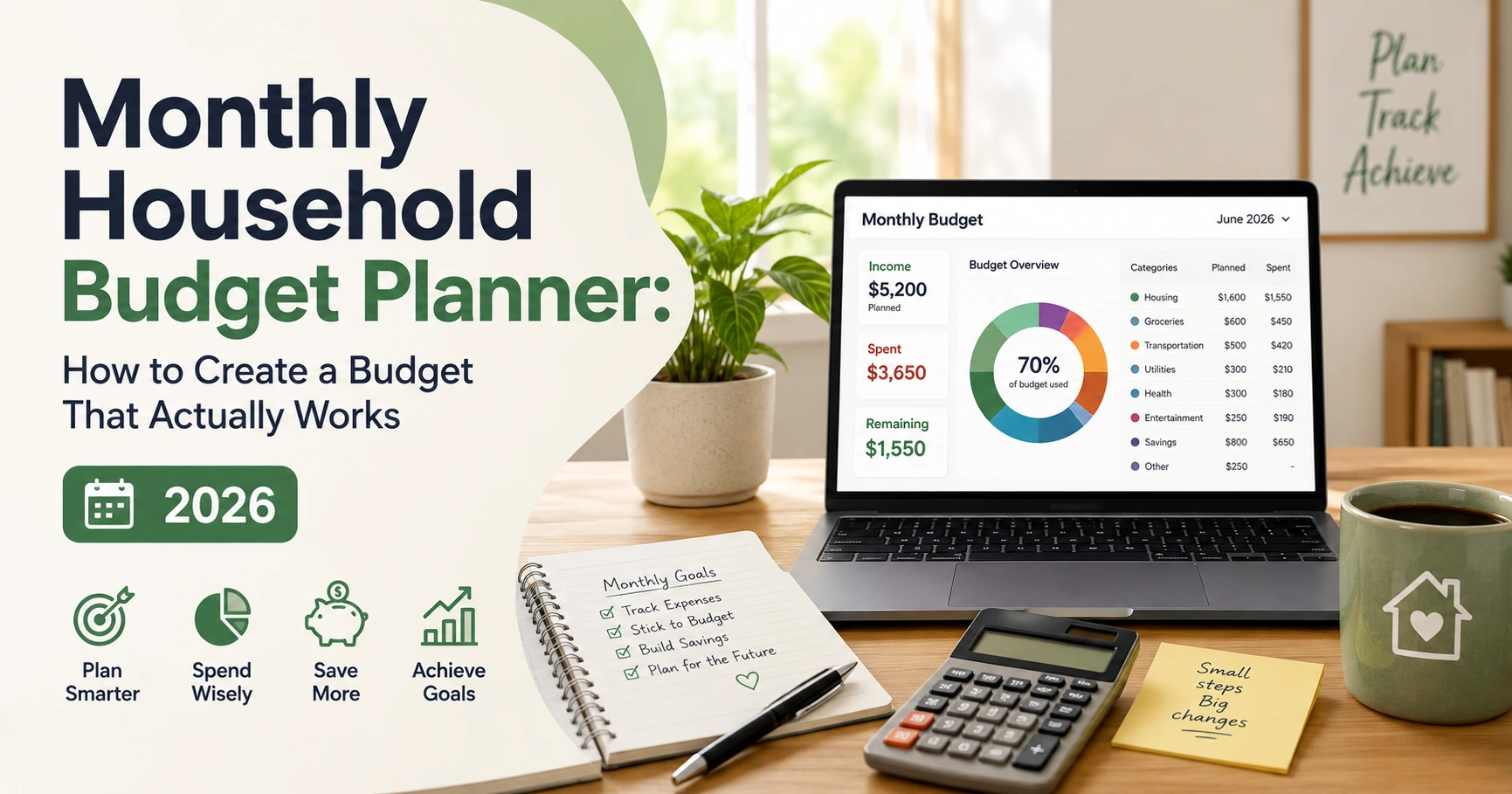
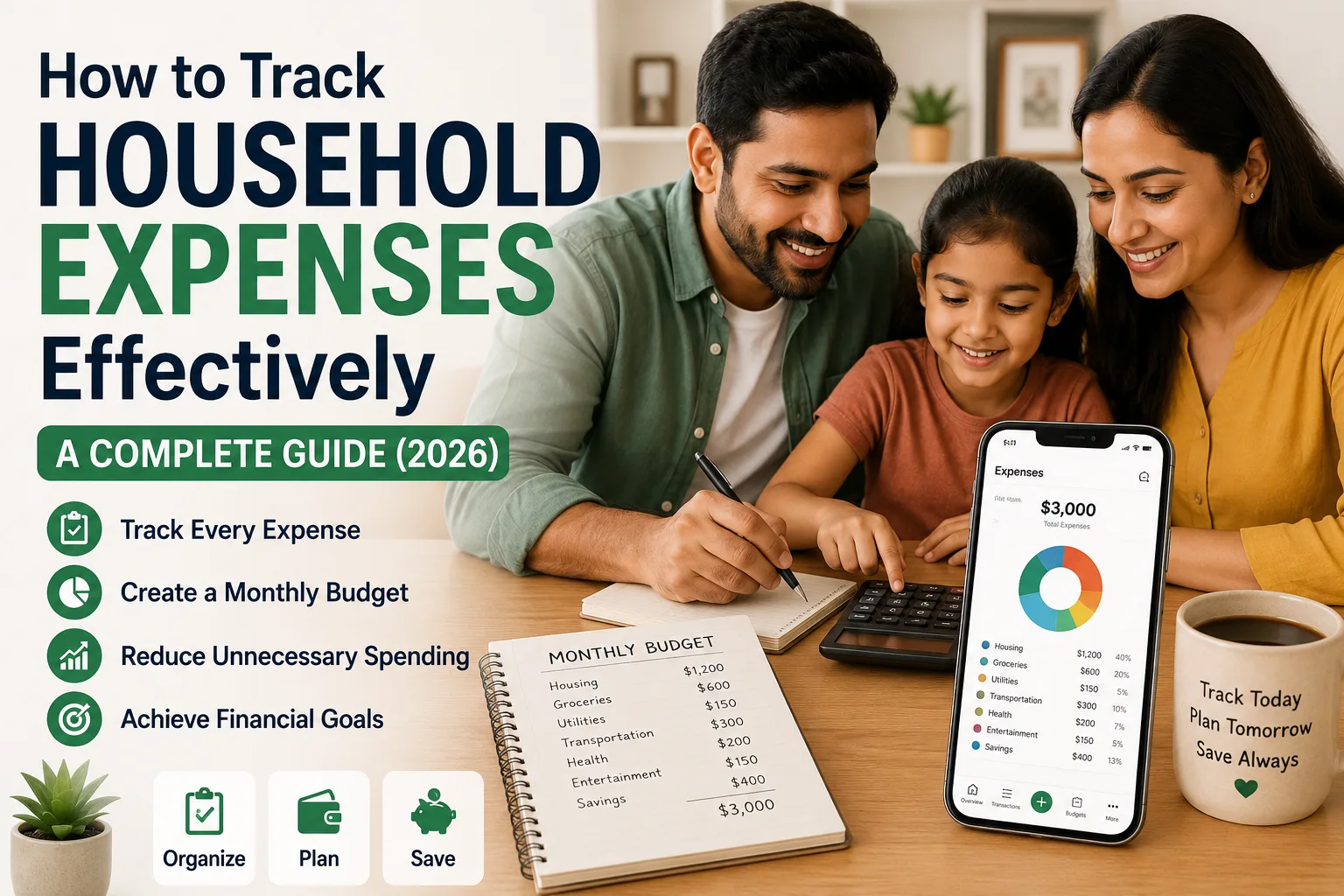
Monthly Household Budget Planner: How to Create a Budget That Actually Works (2026)
Creating a monthly household budget is one of the most effective ways to take control of your finances. A well-planned budget helps you understand where your money goes, prepare for upcoming expenses, and make informed spending decisions instead of relying on guesswork.
Whether you're managing your finances on your own, budgeting with your partner, or planning expenses for your entire family, a monthly household budget planner provides a clear roadmap for your income and expenses. It helps you prioritize essential spending, reduce unnecessary purchases, and build healthier financial habits over time.
The good news is that creating a budget doesn't have to be complicated. In this guide, you'll learn how to build a realistic monthly household budget, avoid common budgeting mistakes, choose the right budget categories, and find the best tools to simplify the process.
Why Every Household Needs a Monthly Budget
A monthly budget is more than just a list of numbers—it's a financial plan that helps you make better decisions every day. Without a budget, it's easy to overspend in some areas while overlooking important financial goals such as saving for emergencies, paying off debt, or planning future purchases.
A monthly household budget planner gives you a complete view of your finances by showing how much money comes in, where it's spent, and how much remains at the end of the month.
Some of the biggest benefits of budgeting include:
- Better control over household spending.
- Reduced financial stress.
- Easier achievement of savings goals.
- Improved preparation for unexpected expenses.
- Greater confidence when making financial decisions.
Budgeting also creates accountability for families. When everyone understands the household budget, it becomes easier to make spending decisions together and avoid misunderstandings about money.
Even if your income changes from month to month, having a monthly budget provides a framework that helps you adjust your spending without losing control of your finances.
Common Budgeting Mistakes
Many households create a budget with the best intentions but struggle to follow it consistently. In most cases, the problem isn't the budget itself—it's the process used to create and maintain it.
Here are some of the most common budgeting mistakes and how to avoid them.
Creating an Unrealistic Budget
One of the biggest mistakes is setting spending limits that are impossible to maintain. Cutting every non-essential expense may seem like a good idea initially, but unrealistic budgets are difficult to follow over the long term.
Instead, build a budget that reflects your actual lifestyle while gradually identifying areas where you can reduce spending.
Forgetting Irregular Expenses
Not every expense occurs every month. Insurance premiums, annual subscriptions, school fees, vehicle maintenance, and holiday shopping can easily disrupt a monthly budget if they aren't planned for in advance.
Set aside a small amount every month for these irregular expenses so they don't become unexpected financial surprises.
Not Tracking Spending Against the Budget
Creating a budget is only the first step. If you don't compare your actual spending with your planned budget throughout the month, it's difficult to know whether you're staying on track.
Many households find it helpful to review their budget every week instead of waiting until the end of the month.
Using Too Many Categories
A budget with dozens of spending categories quickly becomes difficult to maintain. Start with broad categories such as housing, groceries, transportation, utilities, healthcare, entertainment, savings, and miscellaneous expenses. For help setting a realistic grocery budget, plan your food spending before the month begins.
You can always create more detailed categories later if needed.
Trying to Budget Alone
When multiple people contribute to household finances, budgeting works best when everyone participates. Discuss financial goals together, agree on spending priorities, and review the household budget regularly.
A shared understanding of the budget reduces misunderstandings and helps everyone work toward the same financial goals.
How to Create a Monthly Household Budget in 7 Steps
You can follow these steps using our free household budget calculator to enter income, expenses and review your remaining savings.
Creating a monthly household budget doesn't require financial expertise. By following a simple process and reviewing it regularly, you can build a budget that works for your household and adapts as your financial situation changes.
Step 1: Calculate Your Monthly Income
Start by listing every source of income your household receives each month. This may include salaries, freelance work, business income, rental income, pensions, government benefits, or investment income.
If your income varies each month, use the average of the last six months as your starting point. This gives you a realistic estimate when planning your monthly household budget.
Step 2: List Every Household Expense
Next, write down all of your monthly expenses. Divide them into fixed expenses and variable expenses.
Common fixed expenses include:
- Rent or mortgage
- Insurance
- Loan repayments
- Internet
- Mobile plans
- School fees
Variable expenses may include:
- Groceries
- Transportation
- Healthcare
- Dining out
- Entertainment
- Shopping
If you're unsure where your money goes, review your recent bank statements or expense records. Tracking your spending for a month can also help you create a more accurate budget.
Step 3: Set Spending Limits
Once you understand your income and expenses, assign a realistic spending limit to each category.
Avoid creating an overly restrictive budget. Instead, focus on setting achievable limits that allow you to manage essential expenses while still leaving room for occasional discretionary spending.
Your budget should support your lifestyle—not become a source of unnecessary stress.
Step 4: Prioritize Savings
Treat savings as an essential monthly expense rather than something you do with money that's left over.
Whether you're building an emergency fund, saving for a vacation, or planning a major purchase, setting aside money first makes it much easier to reach your financial goals.
Even small, consistent contributions can grow into significant savings over time.
Step 5: Review Your Budget Every Week
A monthly budget should be reviewed throughout the month, not only after the month ends.
Weekly reviews help you identify overspending early, make adjustments before problems grow, and stay aligned with your financial goals.
Regular reviews also make month-end budgeting much less stressful. A monthly expense checklist for families gives you a structured list of categories to review so nothing important gets overlooked.
Step 6: Adjust Your Budget When Needed
Household finances change constantly. A salary increase, unexpected medical expense, new family member, or change in living costs may require you to adjust your budget.
Think of your monthly household budget planner as a living document that evolves with your household rather than a fixed set of rules.
Step 7: Use a Budget Planner That Everyone Can Access
If multiple people manage household finances, everyone should have access to the same budget.
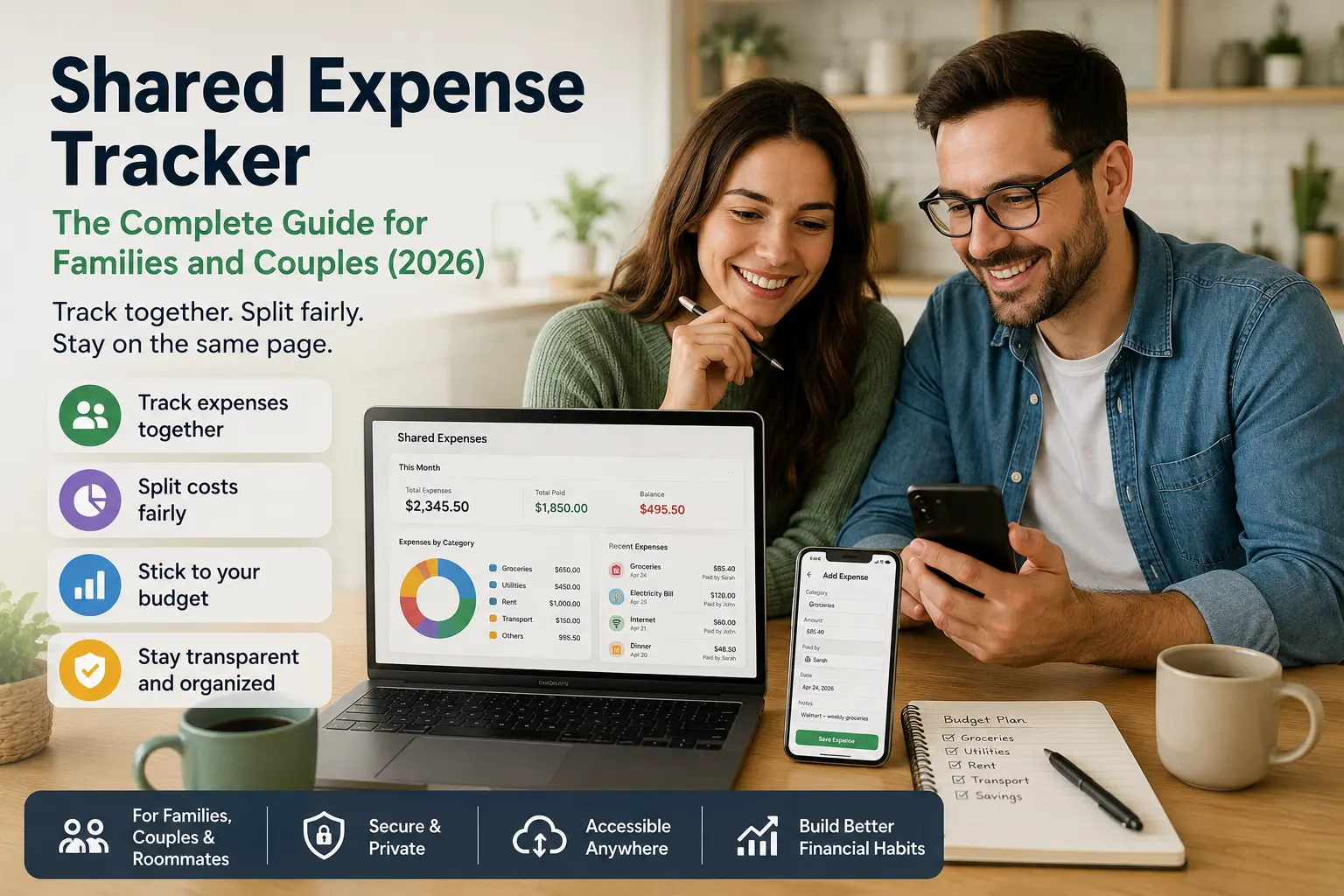
Using a shared budget planner makes it easier to update spending, review progress, and work toward common financial goals together. Instead of maintaining separate spreadsheets, everyone can contribute to a single, up-to-date household budget.
Recommended Household Budget Categories
Choosing the right budget categories makes it easier to understand where your money goes and identify areas where you can reduce unnecessary spending. Start with broad categories that cover your essential expenses, then customize them as your household's needs change.
Here are some of the most common household budget categories:
| Category | Examples |
|---|
| Housing | Rent, mortgage, property tax, maintenance |
| Groceries | Food, household supplies, cleaning products |
| Utilities | Electricity, water, gas, internet, mobile bills |
| Transportation | Fuel, public transport, vehicle maintenance |
| Healthcare | Insurance, medicines, doctor visits |
| Education | School fees, books, online courses |
| Entertainment | Movies, streaming services, hobbies |
| Savings | Emergency fund, investments, retirement |
| Miscellaneous | Gifts, clothing, unexpected expenses |
There's no perfect set of categories for every household. The goal is to create a budget that's simple enough to maintain while still providing meaningful insights into your spending habits.
As your household grows or your financial priorities change, review your budget categories every few months and adjust them where necessary.
How Much Should You Spend in Each Category?
One of the most common questions people ask is how much they should budget for each expense category. The answer depends on your income, location, family size, and financial goals. Rather than following strict percentages, use them as a starting point and adjust based on your circumstances.
| Category | Suggested Range |
|---|
| Housing | 25–35% |
| Groceries | 10–15% |
| Transportation | 10–15% |
| Utilities | 5–10% |
| Healthcare | 5–10% |
| Entertainment | 5–10% |
| Savings & Investments | 15–25% |
| Miscellaneous | 5–10% |
These percentages aren't fixed rules. Every household has different priorities. Some families may choose to save more, while others may temporarily spend more on education, healthcare, or housing.
The purpose of a monthly household budget planner isn't to force every household into the same spending pattern. Instead, it helps you understand your own spending habits so you can make informed financial decisions and gradually improve your budget over time.
Spreadsheet vs Budget Planner App
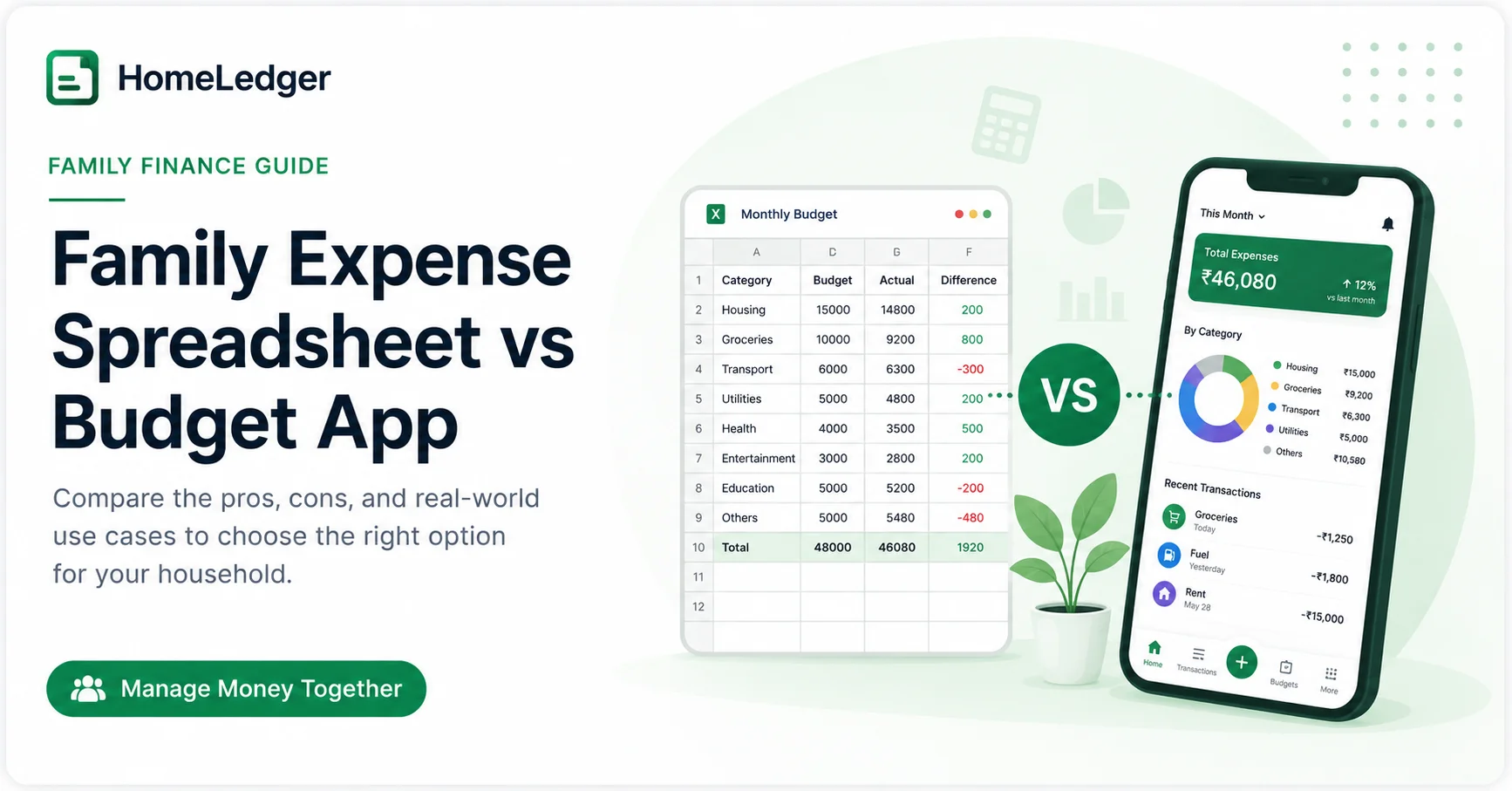
Many households begin their budgeting journey with a spreadsheet. It's free, flexible, and familiar, making it a good starting point for simple budgets. However, as household finances become more complex, spreadsheets often require significant manual effort to maintain.
Here's how the two approaches compare:
| Feature | Spreadsheet | Budget Planner App |
|---|
| Free to start | ✅ | ✅ |
| Automatic budget tracking | ❌ | ✅ |
| Shared access for family members | Limited | ✅ |
| Real-time updates | ❌ | ✅ |
| Spending insights | Limited | ✅ |
| Budget progress tracking | Manual | ✅ |
| Recurring expense management | Manual | ✅ |
Spreadsheets work well for households with straightforward financial needs. But if you're regularly tracking expenses, managing monthly budgets, or budgeting together with your family, a dedicated budget planner can save time and provide better visibility into your finances.
The best budgeting system is one that everyone in the household can use consistently.
Features to Look For in a Budget Planner
Choosing the right budget planner can make the difference between building a lasting budgeting habit and giving up after a few weeks.
Look for features such as:
- Monthly budget creation and tracking.
- Shared access for multiple household members.
- Custom spending categories.
- Budget progress indicators.
- Recurring transaction support.
- Bank statement import.
- Spending insights and reports.
- Fast search and transaction history.
A good budget planner should simplify financial management rather than adding more work.
Why HomeLedger Makes Budgeting Easier
HomeLedger is designed for families and households that want to manage both budgeting and expense tracking in one place.
Instead of maintaining separate spreadsheets, everyone contributes to the same household budget while keeping expenses organized and easy to review.
With HomeLedger, you can:
- Create monthly budgets for different spending categories.
- Track income and expenses together.
- Import bank statements to reduce manual work.
- Record recurring transactions.
- Review spending against your monthly budget.
- Search historical transactions instantly.
- View household spending insights from a single dashboard.
Whether you're creating your first monthly household budget or improving an existing one, HomeLedger helps your entire household stay organized and work toward shared financial goals.
Compare your plan with the 50/30/20 guideline
Try the 50/30/20 budget calculator to compare your monthly needs, wants and savings with a simple take-home-income allocation. Treat the percentages as a starting point, not a requirement.
Frequently Asked Questions
What is a monthly household budget planner?
A monthly household budget planner helps you organize your income, expenses, savings, and spending limits for each month. It provides a structured way to manage household finances and make better financial decisions.
How often should I update my budget?
Review your budget every week and make adjustments whenever your income, expenses, or financial priorities change. A monthly review helps you prepare for the following month.
What are the most important household budget categories?
Housing, groceries, utilities, transportation, healthcare, savings, education, and entertainment are among the most common categories. Your budget should reflect your household's specific needs.
Is a spreadsheet good enough for budgeting?
A spreadsheet works well for simple budgeting. However, if multiple people manage the household finances or you want automatic tracking and budgeting features, a dedicated budget planner is usually more convenient.
Can families use the same budget planner?
Yes. A shared budget planner allows every household member to contribute to the same budget, making collaboration, transparency, and financial planning much easier.
Conclusion
A successful budget isn't about restricting every purchase—it's about making intentional financial decisions that support your household's goals.
By understanding your income, organizing your expenses, setting realistic spending limits, and reviewing your progress regularly, you can build a monthly budget that's practical and sustainable.
Whether you prefer a spreadsheet or a dedicated monthly household budget planner, consistency is the key to long-term success. Choose a budgeting system that your household will actually use, review it regularly, and improve it over time as your financial needs evolve.